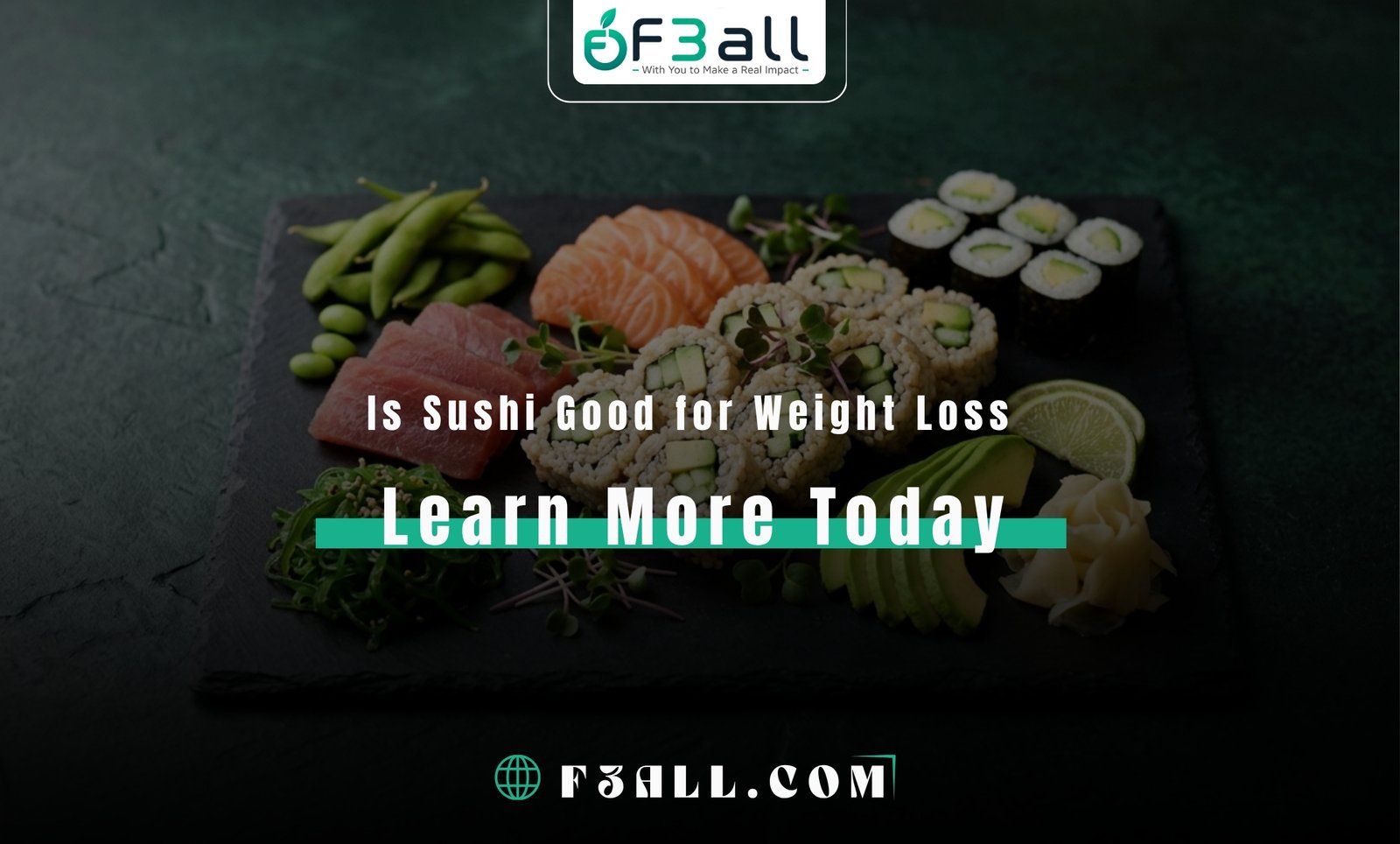
Discover Is Sushi Good for Weight Loss | F3all
Many people ask, Is Sushi Good for Weight Loss? Sushi can be a nutritious meal because it often combines fish, rice, vegetables, and seaweed into balanced portions. However, not every type of sushi is equally healthy. Ingredients, sauces, preparation methods, and portion sizes all influence the calorie content. This guide explains how sushi fits into a healthy eating plan, which options are lower in calories, and how to enjoy sushi while working toward sustainable weight-loss goals.
Is Sushi Good for Weight Loss?

Sushi has become one of the world’s most popular healthy meal choices.
Many people assume every sushi roll is automatically low in calories.
The reality depends on the ingredients.
Is Sushi Good for Weight Loss? Yes, sushi can fit into a calorie-controlled diet when you choose simpler rolls, lean seafood, vegetables, and moderate portions. Fried rolls, creamy sauces, and oversized servings may significantly increase calorie intake.
Healthy eating is about making informed choices rather than avoiding entire food groups.
At F3all, we believe balanced nutrition should be flexible, enjoyable, and based on scientific evidence.
Why Sushi Can Be a Healthy Meal

Many sushi ingredients provide valuable nutrients.
Common benefits include:
- Lean protein.
- Whole-food ingredients.
- Omega-3 fats from certain fish.
- Vitamins and minerals.
- Moderate portion sizes.
Choosing fresh ingredients helps improve the overall nutritional value.
Sushi Calories Diet
A successful sushi calories diet begins by understanding that different sushi varieties contain different calorie amounts.
Generally lower-calorie choices include:
- Sashimi.
- Cucumber rolls.
- Tuna rolls.
- Salmon rolls.
- Vegetable rolls.
Fried rolls and creamy toppings usually increase calorie content.
Read more about:Discover Is Hummus Good for Weight Loss | F3all
Japanese Diet Weight Loss
The traditional Japanese diet weight loss pattern emphasizes balance and variety.
Common foods include:
- Fish.
- Rice.
- Vegetables.
- Seaweed.
- Soy products.
This eating style encourages whole foods and moderate portions rather than highly processed meals.
Rice Fish Diet Benefits
The rice fish diet benefits come from combining nutritious carbohydrates with high-quality protein.
Together they provide:
- Energy.
- Muscle-supporting protein.
- Healthy fats from certain fish.
- Important vitamins and minerals.
Balanced meals help support long-term healthy eating habits.
Read more about:Discover Is Hummus Good for Weight Loss | F3all
Low Calorie Sushi Options
Many low calorie sushi options are available when ordering carefully.
Popular choices include:
- Salmon nigiri.
- Tuna sashimi.
- Avocado rolls.
- Vegetable rolls.
- Cucumber rolls.
Choosing simple preparations often reduces unnecessary calories.
Protein Seafood Diet
A protein seafood diet includes many nutritious protein sources.
Examples include:
- Salmon.
- Tuna.
- Shrimp.
- Cod.
- Sardines.
- Mackerel.
Seafood provides protein while many varieties also contain beneficial omega-3 fatty acids.
Read more about:Discover Is Hummus Good for Weight Loss | F3all
Healthy Asian Meals
Sushi is only one example of healthy Asian meals.
Other nutritious options include:
- Grilled fish.
- Stir-fried vegetables.
- Miso soup.
- Edamame.
- Brown rice bowls.
Meals emphasizing vegetables and lean protein support balanced nutrition.
Portion Control Sushi
Practicing portion control sushi helps prevent excessive calorie intake.
Helpful strategies include:
- Ordering fewer specialty rolls.
- Choosing sashimi alongside rolls.
- Eating slowly.
- Including vegetables.
- Avoiding oversized portions.
Mindful eating makes sushi easier to include within healthy meal plans.
Read more about:Discover Is Hummus Good for Weight Loss | F3all
Omega 3 Diet Foods
Many omega 3 diet foods support overall health.
Examples include:
- Salmon.
- Sardines.
- Mackerel.
- Tuna.
- Walnuts.
- Chia seeds.
Omega-3 fats contribute to a balanced eating pattern.
Balanced Sushi Nutrition
Balanced sushi nutrition combines several food groups in one meal.
These include:
- Lean protein.
- Complex carbohydrates.
- Healthy fats.
- Vegetables.
- Seaweed.
Choosing a variety of nutritious ingredients creates a more satisfying meal.
Diet Friendly Fast Food
Many people consider sushi one of the better diet friendly fast food options when compared with heavily fried meals.
| Healthier Choice | Benefit |
| Sashimi | High protein, no rice |
| Salmon Roll | Lean protein |
| Tuna Roll | Balanced meal |
| Vegetable Roll | Lower calorie option |
| Miso Soup | Light starter |
| Edamame | Plant protein and fiber |
Making thoughtful menu selections supports healthier eating even when dining out.
Read more about:Discover Is Hummus Good for Weight Loss | F3all
Common Mistakes When Ordering Sushi
Many restaurant choices increase calories more than expected.
Common mistakes include:
- Ordering fried rolls.
- Choosing creamy sauces.
- Eating oversized portions.
- Drinking sugary beverages.
- Skipping vegetables.
- Ignoring total calorie intake.
Simple menu choices often create a healthier meal without sacrificing enjoyment.
The Best Sushi Choices for Weight Loss
Not every sushi roll offers the same nutritional value.
If your goal is healthy weight management, prioritize sushi made with simple, fresh ingredients.
Better choices include:
- Salmon rolls.
- Tuna rolls.
- Cucumber rolls.
- Vegetable rolls.
- Sashimi.
- Nigiri in moderate portions.
These options generally contain fewer high-calorie sauces and fried ingredients.
Read more about:Discover Is Hummus Good for Weight Loss | F3all
Healthy Side Dishes with Sushi
Adding nutritious side dishes creates a more balanced meal.
Healthy options include:
| Side Dish | Main Benefit |
| Miso Soup | Light starter |
| Edamame | Plant protein and fiber |
| Seaweed Salad | Vitamins and minerals |
| Steamed Vegetables | Low-calorie nutrition |
| Green Tea | Sugar-free beverage |
Choosing lighter side dishes may help increase satisfaction without adding excessive calories.
Can Sushi Replace Fast Food?
For many people, sushi can be a healthier alternative to traditional fast food.
Compared with many fried meals, sushi often provides:
- Lean protein.
- Whole-food ingredients.
- More seafood.
- Less saturated fat.
- Better nutritional variety.
Preparation methods and portion sizes still make a significant difference.
Building a Balanced Sushi Meal
A healthy sushi meal combines several nutritious food groups.
A balanced plate may include:
- One moderate portion of sushi.
- Sashimi or grilled fish.
- Miso soup.
- Seaweed salad.
- Plenty of water.
This combination provides protein, vegetables, and satisfying flavors while helping control calories.
Read more about:Discover Is Hummus Good for Weight Loss | F3all
Smart Restaurant Tips
Eating sushi at restaurants can still support healthy eating habits.
Helpful strategies include:
- Order simple rolls first.
- Limit creamy sauces.
- Share large platters.
- Eat slowly.
- Stop eating when comfortably satisfied.
Mindful eating is just as important as choosing healthier ingredients.
Long-Term Healthy Eating Habits
Weight management depends on consistent daily choices rather than one meal.
Healthy habits include:
- Eating balanced meals.
- Staying physically active.
- Drinking enough water.
- Sleeping well.
- Practicing portion control.
- Choosing mostly whole foods.
These habits support sustainable results over time.
Common Myths About Sushi
Many myths continue to circulate about sushi and healthy eating.
Myth: All Sushi Is Low in Calories
Some specialty rolls contain fried ingredients, creamy sauces, and large amounts of rice, making them much higher in calories.
Myth: Rice Should Always Be Avoided
Rice can fit into a balanced eating plan when consumed in appropriate portions.
Myth: Sushi Is Only Healthy Because of Fish
Vegetables, seaweed, and balanced portion sizes also contribute to the nutritional value of sushi.
Myth: You Can Eat Unlimited Sushi
Even nutritious foods contribute calories, making portion control essential.
Myth: Sushi Alone Causes Weight Loss
No single meal causes fat loss. Sustainable results depend on overall nutrition and healthy lifestyle habits.
Read more about:Discover Is Hummus Good for Weight Loss | F3all
Why F3all Is Your Best Choice

At F3all, we believe healthy eating should never mean giving up the foods you enjoy. We help you understand Is Sushi Good for Weight Loss through evidence-based nutrition guidance that explains how sushi can become part of a balanced eating plan when you choose fresh ingredients, moderate portions, and nutritious side dishes. Rather than promoting restrictive dieting, we show how Is Sushi Good for Weight Loss depends on smart food choices, balanced meals, and sustainable healthy habits.
Our evidence-based educational content helps readers understand how different foods fit into healthy meal planning while building long-term habits that support lasting wellness. Whether you’re dining out or preparing meals at home, F3all provides practical guidance you can trust.
Why people choose F3all:
- Science-based nutrition education.
- Practical healthy eating guidance.
-
- Sustainable strategies for Is Sushi Good for Weight Loss.
- Balanced meal-planning advice.
- Long-term wellness support.
- Trusted educational resources backed by scientific evidence.
Whether you’re exploring Is Sushi Good for Weight Loss or learning how to make healthier restaurant choices, F3all provides practical, evidence-based guidance that supports smarter nutrition and long-term success.
Frequently Asked Questions
Is Sushi Good for Weight Loss?
Yes. Is Sushi Good for Weight Loss is a common question because sushi can support a calorie-controlled eating plan when you choose simple rolls, lean seafood, vegetables, and appropriate portion sizes.
Which sushi is lowest in calories?
Sashimi, cucumber rolls, vegetable rolls, tuna rolls, and salmon rolls are generally among the lighter options.
Is sashimi healthier than sushi rolls?
Sashimi contains fish without rice, making it higher in protein and lower in carbohydrates than many sushi rolls.
Can I eat sushi while dieting?
Absolutely. Sushi can fit into a balanced diet when eaten in moderation and paired with nutritious side dishes.
Are fried sushi rolls healthy?
Fried rolls often contain more calories and fat than traditional sushi rolls, so they are usually best enjoyed less frequently.
Is sushi a good source of protein?
Yes. Many sushi varieties contain fish that provides high-quality protein.
Does sushi contain healthy fats?
Fatty fish such as salmon and mackerel naturally provide omega-3 fatty acids that support overall health.
What should I drink with sushi?
Water, sparkling water, unsweetened tea, or green tea are excellent beverage choices.
How can I reduce calories when eating sushi?
Choose simple rolls, avoid creamy sauces, include vegetables, and practice portion control.
Why choose F3all for Is Sushi Good for Weight Loss?
F3all provides evidence-based nutrition education on Is Sushi Good for Weight Loss, helping individuals make smarter food choices, build balanced meal plans, and achieve sustainable weight-management goals through practical lifestyle strategies.
In the End
Understanding Is Sushi Good for Weight Loss comes down to making balanced food choices. Sushi can provide lean protein, fresh seafood, vegetables, and beneficial nutrients that fit comfortably into a healthy eating plan when enjoyed in sensible portions. By choosing simple rolls, limiting fried options and creamy sauces, and pairing sushi with nutritious side dishes, you can enjoy your favorite meal while supporting your long-term health goals. At F3all, we believe Is Sushi Good for Weight Loss is best answered through evidence-based nutrition, practical meal planning, and sustainable lifestyle habits that support lasting wellness and successful weight management.
Sources