
Macro Percentages for Weight Loss | Calculate Now
Choosing the right Macro Percentages for Weight Loss can help you organize meals, manage calorie intake, and support muscle maintenance while working toward a healthier body weight. Macronutrients—protein, carbohydrates, and fats—supply energy and perform essential functions throughout the body. Understanding their percentages allows you to convert a daily calorie target into practical food quantities.
This guide also explains weight loss percentage calculations, including how to measure the proportion of starting body weight lost, calculate weekly changes, and evaluate progress toward a target. These are separate measurements: macro percentages describe your diet, while weight loss percentages describe changes in body weight.
Macro Percentages for Weight Loss

Macro Percentages for Weight Loss represent the percentage of daily calories supplied by protein, carbohydrates, and fat.
Each macronutrient provides a different amount of energy:
| Macronutrient | Calories per Gram | Main Functions |
| Protein | 4 kcal | Tissue repair, muscle maintenance, enzymes |
| Carbohydrates | 4 kcal | Energy for daily activity and exercise |
| Fat | 9 kcal | Essential fatty acids, cell function, vitamin absorption |
For example, a diet with 30% protein, 45% carbohydrates, and 25% fat allocates those proportions of total calories to each nutrient.
The percentages must add up to 100%.
However, there is no universally optimal macro ratio for losing weight. Different distributions can support weight management when overall energy intake, nutritional adequacy, and consistency are appropriate.
Macro percentages help organize nutrition, but they do not independently determine whether weight loss occurs.
Best Macro Percentages for Weight Loss
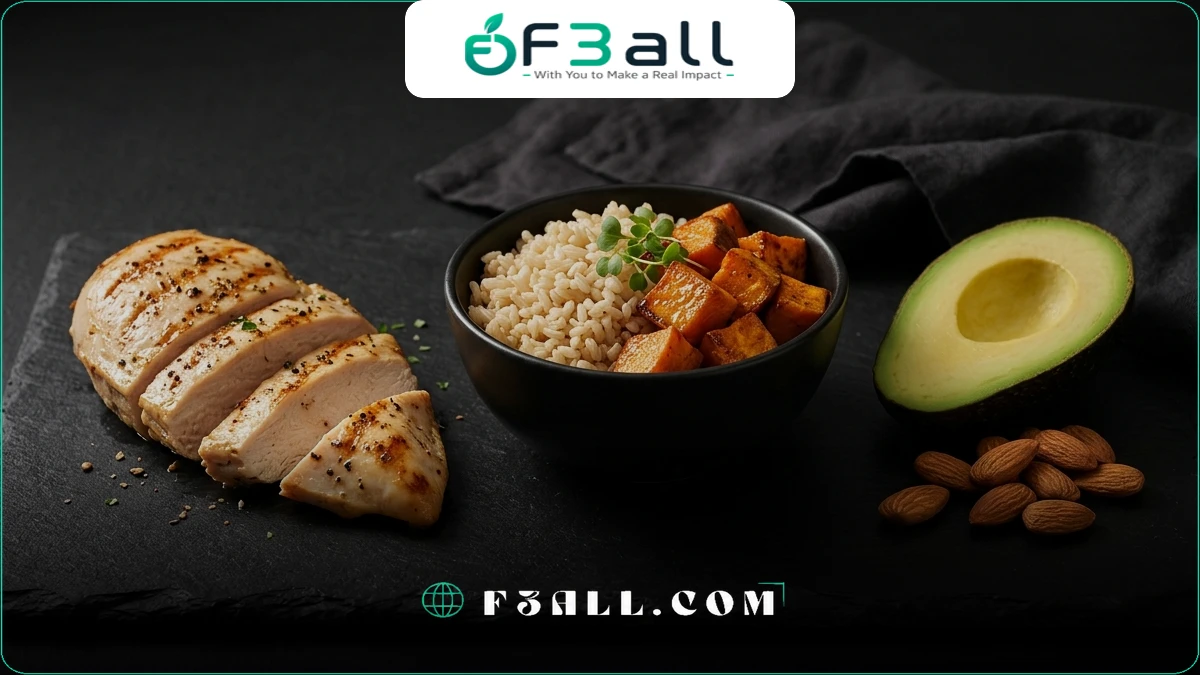
The most appropriate macronutrient distribution depends on activity level, dietary preferences, age, health status, and individual nutritional requirements.
For adults, the Acceptable Macronutrient Distribution Ranges are:
- Protein: 10–35% of total calories.
- Carbohydrates: 45–65% of total calories.
- Fat: 20–35% of total calories.
These ranges describe general nutritional recommendations rather than a specific weight-loss prescription.
Practical Macro Ratio Examples
| Dietary Approach | Protein | Carbohydrates | Fat |
| Balanced | 25% | 50% | 25% |
| Higher Protein | 30% | 45% | 25% |
| Moderate Protein | 20% | 50% | 30% |
| Higher Carbohydrate | 20% | 55% | 25% |
All four examples fall within the general adult distribution ranges.
A person who performs regular resistance training may prioritize adequate protein, while someone involved in endurance exercise may prefer a greater carbohydrate proportion.
These ratios should be adjusted to individual needs rather than treated as guaranteed fat-loss formulas.
The best macro percentages for weight loss are those that provide adequate nutrition and fit a sustainable eating pattern.
How to Calculate Macro Percentages for Weight Loss
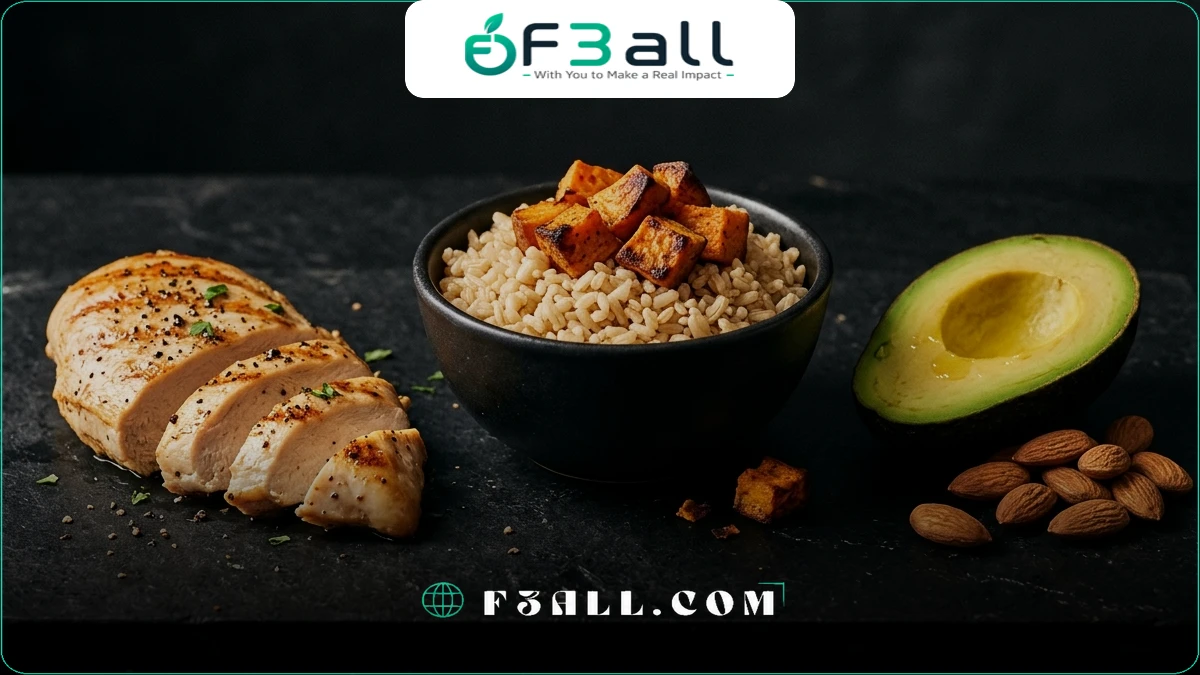
Calculating macros involves converting percentages of daily calories into grams of protein, carbohydrates, and fat.
The process requires a daily calorie target and a chosen macronutrient distribution.
Macro Calculation Formulas
Protein grams = (Daily calories × Protein percentage) ÷ 4
Carbohydrate grams = (Daily calories × Carbohydrate percentage) ÷ 4
Fat grams = (Daily calories × Fat percentage) ÷ 9
Percentages must be expressed as decimals.
For example, 30% becomes 0.30.
Example Using 2,000 Calories
Assume the following macro distribution:
- Protein: 30%.
- Carbohydrates: 45%.
- Fat: 25%.
Protein calculation
2,000 × 0.30 = 600 calories.
600 ÷ 4 = 150 grams.
Carbohydrate calculation
2,000 × 0.45 = 900 calories.
900 ÷ 4 = 225 grams.
Fat calculation
2,000 × 0.25 = 500 calories.
500 ÷ 9 = approximately 55.6 grams.
| Macronutrient | Percentage | Calories | Grams |
| Protein | 30% | 600 | 150 g |
| Carbohydrates | 45% | 900 | 225 g |
| Fat | 25% | 500 | 55.6 g |
| Total | 100% | 2,000 | — |
The 2,000-calorie figure is an example, not a personalized recommendation.
For guidance on structuring meals around a suitable calorie target, explore Weight Loss Diet Plans.
Macro calculations turn calorie percentages into practical daily nutrient targets.
Macro Percentage Calculator Examples
A macro percentage calculator can simplify the conversion from calories to grams.
The table below demonstrates how a 30% protein, 45% carbohydrate, and 25% fat distribution changes across different calorie targets.
| Daily Calories | Protein | Carbohydrates | Fat |
| 1,500 | 112.5 g | 168.8 g | 41.7 g |
| 1,600 | 120 g | 180 g | 44.4 g |
| 1,800 | 135 g | 202.5 g | 50 g |
| 2,000 | 150 g | 225 g | 55.6 g |
| 2,200 | 165 g | 247.5 g | 61.1 g |
| 2,400 | 180 g | 270 g | 66.7 g |
These examples illustrate why identical macro percentages do not produce identical gram targets.
For instance, 30% protein at 1,500 calories provides 112.5 grams, while the same percentage at 2,400 calories provides 180 grams.
The calorie target must therefore be considered alongside the macro ratio.
A macro calculator is useful for meal planning, but the resulting numbers should reflect appropriate individual energy needs.
Weight Loss Percentage Calculator
A Weight Loss Percentage Calculator measures how much body weight has changed relative to the starting measurement.
This is different from calculating macronutrient percentages.
The standard weight loss percentage formula is:
Weight Loss Percentage = [(Starting Weight − Current Weight) ÷ Starting Weight] × 100
For example:
- Starting weight: 100 kg.
- Current weight: 94 kg.
- Weight lost: 6 kg.
Calculation:
(100 − 94) ÷ 100 × 100 = 6%.
The person has lost 6% of their starting body weight.
Weight Loss Percentage Examples
| Starting Weight | Current Weight | Weight Lost | Percentage Lost |
| 70 kg | 67 kg | 3 kg | 4.29% |
| 80 kg | 76 kg | 4 kg | 5% |
| 90 kg | 85 kg | 5 kg | 5.56% |
| 100 kg | 92 kg | 8 kg | 8% |
| 120 kg | 108 kg | 12 kg | 10% |
The same formula works with pounds, provided both measurements use the same unit.
A weight loss percentage calculator provides a standardized measure of progress regardless of starting body weight.
Read more about: High Protein Low Carb Recipes for Weight Loss | Try Now
How to Calculate Weight Loss Percentage
Learning How to Calculate Weight Loss Percentage is straightforward when you follow a consistent process.
Step 1 – Record Your Starting Weight
Use the weight recorded at the beginning of the tracking period.
For example, 85 kilograms.
Step 2 – Record Your Current Weight
Use a recent measurement taken under comparable conditions.
For example, 81 kilograms.
Step 3 – Calculate the Weight Difference
85 − 81 = 4 kilograms.
Step 4 – Divide by Starting Weight
4 ÷ 85 = approximately 0.0471.
Step 5 – Convert to a Percentage
0.0471 × 100 = approximately 4.71%.
The person has lost approximately 4.71% of their starting weight.
Common Calculation Errors
- Dividing by current weight instead of starting weight.
- Mixing kilograms and pounds.
- Forgetting to multiply by 100.
- Comparing measurements taken under inconsistent conditions.
- Confusing total weight lost with percentage lost.
Accurate percentage calculations require consistent units and the original starting weight as the denominator.
Percent Body Weight Lost Formula
The Percent Body Weight Lost Formula is useful because the same amount of weight loss represents different percentages for people with different starting weights.
Consider two people who each lose 5 kilograms.
One begins at 70 kilograms.
The other begins at 100 kilograms.
Their percentage changes are different.
| Starting Weight | Weight Lost | Percent Body Weight Lost |
| 70 kg | 5 kg | 7.14% |
| 80 kg | 5 kg | 6.25% |
| 90 kg | 5 kg | 5.56% |
| 100 kg | 5 kg | 5% |
| 120 kg | 5 kg | 4.17% |
This is why percentages are frequently used to describe weight-management outcomes.
However, the percentage alone does not establish whether weight loss is appropriate for an individual.
Body composition, medical history, and current nutritional status also matter.
The percent body weight lost formula helps contextualize changes without relying only on kilograms or pounds.
Weight Change Percentage Formula
The Weight Change Percentage Formula can measure either weight loss or weight gain.
Unlike the weight loss percentage formula, it uses current weight minus starting weight.
Weight Change Percentage = [(Current Weight − Starting Weight) ÷ Starting Weight] × 100
A negative result indicates weight loss.
A positive result indicates weight gain.
Example of Weight Loss
Starting weight: 90 kg.
Current weight: 86 kg.
(86 − 90) ÷ 90 × 100 = −4.44%.
The result indicates a 4.44% decrease.
Example of Weight Gain
Starting weight: 90 kg.
Current weight: 94 kg.
(94 − 90) ÷ 90 × 100 = 4.44%.
The result indicates a 4.44% increase.
| Starting Weight | Current Weight | Percentage Change |
| 80 kg | 76 kg | −5% |
| 80 kg | 84 kg | +5% |
| 100 kg | 95 kg | −5% |
| 100 kg | 105 kg | +5% |
The weight change percentage formula is useful when tracking body-weight changes in either direction.
Body Weight Percentage Calculator
A Body Weight Percentage Calculator may also be used to determine what proportion of starting weight remains.
This is different from calculating the percentage lost.
Remaining Body Weight Percentage = (Current Weight ÷ Starting Weight) × 100
For example:
Starting weight: 100 kg.
Current weight: 93 kg.
93 ÷ 100 × 100 = 93%.
The person currently weighs 93% of their starting weight.
The corresponding weight loss percentage is 7%.
Remaining Weight Examples
| Starting Weight | Current Weight | Percentage Remaining | Percentage Lost |
| 80 kg | 76 kg | 95% | 5% |
| 90 kg | 81 kg | 90% | 10% |
| 100 kg | 95 kg | 95% | 5% |
| 120 kg | 108 kg | 90% | 10% |
Both percentages can describe the same change from different perspectives.
A body weight percentage calculator helps express current weight relative to an established baseline.
Healthy Weight Loss Calculator
A Healthy Weight Loss Calculator should consider whether the desired change is medically appropriate and realistically achievable.
For many adults with overweight or obesity, gradual weight loss of approximately 1–2 pounds per week is commonly recommended.
That corresponds to roughly 0.45–0.9 kilograms weekly.
However, this is general guidance rather than a universal target.
Illustrative Weight Loss Rates
| Average Weekly Change | Four-Week Arithmetic Total |
| 0.25 kg | 1 kg |
| 0.5 kg | 2 kg |
| 0.75 kg | 3 kg |
| 0.9 kg | 3.6 kg |
Real-world weight loss does not necessarily follow a straight line.
Water retention, digestion, medication changes, and other factors can influence scale measurements.
Factors That Influence Healthy Weight Loss
- Starting weight.
- Body composition.
- Age.
- Medical history.
- Current medications.
- Dietary intake.
- Exercise.
- Sleep.
- Individual energy requirements.
A calculator cannot determine medical suitability from weight alone.
For a more comprehensive estimate of energy requirements and projected changes, the NIH Body Weight Planner may be useful.
Healthy weight-loss calculations should support appropriate, sustainable goals rather than encourage aggressive restriction.
Weekly Weight Loss Calculator
A Weekly Weight Loss Calculator measures average weight change over a selected number of weeks.
The basic formula is:
Average Weekly Weight Loss = Total Weight Lost ÷ Number of Weeks
Example
Starting weight: 95 kg.
Current weight: 91 kg.
Duration: 8 weeks.
Total weight lost: 4 kg.
Average weekly weight loss:
4 ÷ 8 = 0.5 kg per week.
Weekly Progress Example
| Week | Weight | Total Weight Lost |
| 0 | 95.0 kg | 0 kg |
| 1 | 94.6 kg | 0.4 kg |
| 2 | 94.1 kg | 0.9 kg |
| 3 | 93.7 kg | 1.3 kg |
| 4 | 93.0 kg | 2.0 kg |
| 5 | 92.7 kg | 2.3 kg |
| 6 | 92.0 kg | 3.0 kg |
| 7 | 91.6 kg | 3.4 kg |
| 8 | 91.0 kg | 4.0 kg |
This table is illustrative rather than predictive.
Individual weight changes may fluctuate considerably.
Weekly weight-loss calculations are most informative when evaluated as averages rather than strict expectations for each week.
Read more about: Estrogen Replacement and Weight Loss Complete Guide Now
Weight Loss Calculator by Date
A Weight Loss Calculator by Date can estimate the average weekly weight change required between a starting date and a target date.
The calculation requires:
- Starting weight.
- Target weight.
- Starting date.
- Target date.
Calculation Formula
Required Weekly Weight Change = (Starting Weight − Target Weight) ÷ Number of Weeks
Example
Starting weight: 90 kg.
Target weight: 84 kg.
Time available: 12 weeks.
Required change:
90 − 84 = 6 kg.
6 ÷ 12 = 0.5 kg per week.
Goal Planning Examples
| Starting Weight | Target Weight | Time Available | Average Weekly Change |
| 90 kg | 86 kg | 8 weeks | 0.50 kg |
| 100 kg | 94 kg | 12 weeks | 0.50 kg |
| 85 kg | 81 kg | 10 weeks | 0.40 kg |
| 110 kg | 104 kg | 16 weeks | 0.375 kg |
The results are mathematical averages, not predictions.
Actual weight change can slow or fluctuate as body weight, energy expenditure, and dietary intake change.
A weight loss calculator by date can help evaluate a timeline, but health and sustainability should take priority over deadlines.
Weight Loss Progress Calculator
A Weight Loss Progress Calculator measures the percentage of a numerical goal that has been completed.
This differs from the percentage of starting body weight lost.
Goal Progress Formula
Goal Progress Percentage = (Weight Lost So Far ÷ Total Planned Weight Loss) × 100
Example
Starting weight: 100 kg.
Current weight: 96 kg.
Target weight: 90 kg.
Total planned loss: 10 kg.
Weight lost so far: 4 kg.
4 ÷ 10 × 100 = 40%.
The person has completed 40% of the numerical target.
Progress Tracking Table
| Starting Weight | Current Weight | Target Weight | Goal Completed |
| 100 kg | 98 kg | 90 kg | 20% |
| 100 kg | 97 kg | 90 kg | 30% |
| 100 kg | 95 kg | 90 kg | 50% |
| 100 kg | 92 kg | 90 kg | 80% |
| 100 kg | 90 kg | 90 kg | 100% |
This formula assumes the target is below the starting weight and has been selected appropriately.
A weight loss progress calculator helps measure numerical goal completion but does not determine whether the goal is medically appropriate.
Calculate Percentage of Weight Lost in Pounds
The formula for calculating percentage weight loss is identical whether you use kilograms or pounds.
Example One
Starting weight: 200 lb.
Current weight: 190 lb.
Weight lost: 10 lb.
10 ÷ 200 × 100 = 5%.
Example Two
Starting weight: 180 lb.
Current weight: 171 lb.
Weight lost: 9 lb.
9 ÷ 180 × 100 = 5%.
Example Three
Starting weight: 150 lb.
Current weight: 144 lb.
Weight lost: 6 lb.
6 ÷ 150 × 100 = 4%.
| Starting Weight | Current Weight | Weight Lost | Percentage |
| 150 lb | 144 lb | 6 lb | 4% |
| 180 lb | 171 lb | 9 lb | 5% |
| 200 lb | 190 lb | 10 lb | 5% |
| 240 lb | 228 lb | 12 lb | 5% |
There is no need to convert pounds into kilograms when both measurements already use pounds.
Calculating percentage weight loss in pounds requires the same starting-weight formula used with kilograms.
Macro Percentages vs Weight Loss Percentage
Macro percentages and weight loss percentages describe completely different measurements.
| Feature | Macro Percentages | Weight Loss Percentage |
| Purpose | Plan nutrient intake | Measure body-weight change |
| Main Inputs | Calories and macro distribution | Starting and current weight |
| Measurement | Percentage of dietary energy | Percentage of starting weight |
| Main Output | Protein, carbohydrate, and fat grams | Percentage lost or gained |
| Typical Use | Meal planning | Progress monitoring |
| Guarantees Fat Loss | No | No |
For example, a person following a diet containing 30% protein does not automatically lose 30% of their starting weight.
Similarly, losing 5% of starting weight does not indicate which macro ratio was followed.
The two calculations can be used together when planning nutrition and evaluating progress.
Understanding the distinction prevents confusion between dietary composition and actual changes in body weight.
Protein Percentages for Weight Loss
Protein supports muscle maintenance, tissue repair, and numerous physiological functions.
During weight loss, adequate protein may help preserve lean mass, particularly when combined with resistance training.
Protein Percentage Examples
| Daily Calories | 20% Protein | 25% Protein | 30% Protein |
| 1,600 | 80 g | 100 g | 120 g |
| 1,800 | 90 g | 112.5 g | 135 g |
| 2,000 | 100 g | 125 g | 150 g |
| 2,200 | 110 g | 137.5 g | 165 g |
These are calculation examples rather than individualized recommendations.
Protein requirements may also be assessed using grams per kilogram of body weight.
Protein-Rich Foods
- Eggs.
- Chicken.
- Fish.
- Greek yogurt.
- Cottage cheese.
- Lentils.
- Beans.
- Tofu.
- Tempeh.
People with certain medical conditions may need individualized protein guidance.
A suitable protein percentage should support nutritional adequacy and muscle maintenance without exceeding individual requirements unnecessarily.
Carbohydrate Percentages for Weight Loss
Carbohydrates provide energy for physical activity and normal body functions.
Carbohydrate-rich foods can also supply important nutrients, particularly when they include fiber-rich whole grains, fruits, vegetables, and legumes.
Carbohydrate Percentage Examples
| Daily Calories | 45% Carbs | 50% Carbs | 55% Carbs |
| 1,600 | 180 g | 200 g | 220 g |
| 1,800 | 202.5 g | 225 g | 247.5 g |
| 2,000 | 225 g | 250 g | 275 g |
| 2,200 | 247.5 g | 275 g | 302.5 g |
A higher carbohydrate percentage does not automatically prevent weight loss.
Total calorie intake and dietary quality remain important.
Nutritious Carbohydrate Sources
- Oats.
- Brown rice.
- Quinoa.
- Whole-grain bread.
- Sweet potatoes.
- Beans.
- Fruit.
- Vegetables.
Carbohydrate percentages should reflect activity needs and food preferences while emphasizing nutritious, fiber-rich choices.
Read more about: L-Carnitine Weight Loss Results 1 Month | See the Evidence
Fat Percentages for Weight Loss
Dietary fat is essential for normal physiological functions, including the absorption of fat-soluble vitamins.
It also supplies essential fatty acids.
Fat contains approximately 9 calories per gram, making portion awareness useful when planning meals.
Fat Percentage Examples
| Daily Calories | 20% Fat | 25% Fat | 30% Fat |
| 1,600 | 35.6 g | 44.4 g | 53.3 g |
| 1,800 | 40 g | 50 g | 60 g |
| 2,000 | 44.4 g | 55.6 g | 66.7 g |
| 2,200 | 48.9 g | 61.1 g | 73.3 g |
Sources of Unsaturated Fats
- Olive oil.
- Avocados.
- Nuts.
- Seeds.
- Fatty fish.
- Nut butters.
Fat intake should be balanced with overall calorie needs and dietary quality.
A weight-loss diet should include adequate dietary fat rather than attempting to eliminate it completely.
Sample Macro-Based Weight Loss Meal Plan
A macro-based eating plan can help distribute nutrients throughout the day.
The following example shows how protein, carbohydrates, and fats can be incorporated into everyday meals.
| Meal | Example | Main Nutritional Focus |
| Breakfast | Greek yogurt, oats, and berries | Protein and carbohydrates |
| Morning Snack | Apple and almonds | Carbohydrates and fats |
| Lunch | Chicken, brown rice, and vegetables | Protein, carbohydrates, and fiber |
| Afternoon Snack | Cottage cheese and fruit | Protein and carbohydrates |
| Dinner | Salmon, sweet potato, and salad | Protein, fats, and carbohydrates |
Actual macro totals depend on portion sizes and preparation methods.
For example, cooking oil, sauces, and toppings can substantially change the calorie and fat content of a meal.
A nutrition tracker or food scale may be useful for people who want more precise measurements.
For additional ideas, explore Delicious Diet Recipes.
A practical macro-based meal plan should prioritize balanced nutrition and manageable habits over perfect daily tracking.
How to Track Weight Loss Progress Accurately
Weight-loss calculations become more useful when measurements are collected consistently.
Daily body weight may change because of hydration, digestion, sodium intake, hormonal fluctuations, and other factors.
Practical Tracking Tips
- Weigh yourself under similar conditions.
- Use the same scale when possible.
- Record measurements consistently.
- Compare weekly averages rather than isolated readings.
- Track exercise performance.
- Consider waist measurements when relevant.
- Review longer-term trends.
- Avoid reacting to small daily fluctuations.
Example Progress Log
| Week | Average Weight | Change From Baseline | Notes |
| 0 | 90.0 kg | 0 kg | Starting measurement |
| 1 | 89.6 kg | −0.4 kg | Routine established |
| 2 | 89.1 kg | −0.9 kg | Consistent meals |
| 3 | 89.3 kg | −0.7 kg | Temporary fluctuation |
| 4 | 88.5 kg | −1.5 kg | Longer-term downward trend |
The table is illustrative.
A temporary increase does not necessarily mean that body fat has increased.
Consistent progress tracking helps distinguish meaningful trends from ordinary short-term weight fluctuations.
Common Macro and Weight Loss Calculation Mistakes
Several errors can make nutrition planning or progress tracking less accurate.
| Mistake | Better Approach |
| Macro percentages exceed 100% | Recheck the distribution |
| Confusing grams and calories | Apply the 4/4/9 conversion |
| Using an unsuitable calorie target | Consider individual requirements |
| Ignoring cooking ingredients | Include oils, sauces, and toppings |
| Dividing weight lost by current weight | Use starting weight |
| Mixing kilograms and pounds | Use consistent units |
| Expecting identical weekly changes | Evaluate longer-term trends |
| Tracking only scale weight | Include fitness and health indicators |
| Choosing unrealistic deadlines | Prioritize sustainable progress |
| Assuming a macro ratio guarantees fat loss | Focus on overall energy balance |
For example, changing from a 25% protein diet to a 30% protein diet does not guarantee faster weight loss if total calorie intake remains inappropriate for the individual.
Similarly, losing 3 kilograms does not have the same percentage meaning for everyone.
Avoiding calculation errors makes macro planning and weight-loss tracking more informative and practical.
Why F3all Is Your Best Choice

At F3all, Macro Percentages for Weight Loss are explained through practical calculations, realistic examples, and balanced nutrition principles. Rather than promoting one rigid macro ratio, F3all focuses on helping readers understand their dietary targets and evaluate progress accurately.
- Clear Macro Formulas: Learn how to calculate protein, carbohydrate, and fat targets from daily calories.
- Practical Weight Loss Calculations: Understand how to calculate percentage weight loss using starting and current measurements.
- Weekly Progress Guidance: Track average weight changes without expecting perfectly linear results.
- Realistic Goal Planning: Understand how target dates and weight changes relate mathematically.
- Balanced Nutrition Advice: Explore suitable food choices across different macro distributions.
- Useful Calculation Examples: Compare kilograms, pounds, and goal-completion percentages.
- Additional Nutrition Resources: Explore Weight Loss, Weight Loss Diet Plans, and Delicious Diet Recipes for more practical guidance.
F3all makes macro planning and weight-loss calculations easier to understand by combining clear formulas with sustainable nutrition habits.
Frequently Asked Questions
What Are the Best Macro Percentages for Weight Loss?
There is no universal best ratio. A balanced example is 25% protein, 50% carbohydrates, and 25% fat, but individual nutritional needs vary.
How Do I Calculate Macro Percentages for Weight Loss?
Multiply daily calories by each macro percentage, then divide protein and carbohydrate calories by 4 and fat calories by 9 to calculate grams.
How Do I Calculate Weight Loss Percentage?
Subtract current weight from starting weight, divide the result by starting weight, and multiply by 100.
What Is the Percent Body Weight Lost Formula?
The formula is: [(Starting Weight − Current Weight) ÷ Starting Weight] × 100.
How Can I Calculate Weekly Weight Loss?
Divide total weight lost by the number of weeks elapsed to calculate average weekly weight change.
Can I Use a Weight Loss Calculator by Date?
Yes. Calculate the number of weeks between two dates and divide the desired weight change by that number. The result is a mathematical average, not a guaranteed outcome.
What Is a Healthy Weekly Weight Loss Rate?
For many adults with overweight or obesity, gradual weight loss of approximately 1–2 pounds per week is commonly recommended, although individual needs differ.
What Is the Difference Between Macro Percentages and Weight Loss Percentage?
Macro percentages describe how dietary calories are distributed among nutrients. Weight loss percentage measures how much starting body weight has been lost.
How Do I Calculate Percentage of Weight Lost in Pounds?
Use the same formula as kilograms: subtract current pounds from starting pounds, divide by starting pounds, and multiply by 100.
How Often Should I Calculate Weight Loss Progress?
Weekly or multiweek reviews can help identify trends. Daily measurements may fluctuate because of hydration and other temporary factors.
In the End
Macro Percentages for Weight Loss provide a practical framework for organizing protein, carbohydrate, and fat intake according to daily calorie needs. Understanding the calories supplied by each macronutrient makes it easier to convert percentages into measurable gram targets.
However, macro percentages and weight loss percentages are not interchangeable. Macro ratios describe dietary composition, while weight loss calculations measure changes relative to starting body weight.
Using a Weight Loss Percentage Calculator, Weekly Weight Loss Calculator, or Weight Loss Progress Calculator can help you monitor changes and evaluate numerical goals.
For sustainable results, focus on adequate nutrition, appropriate calorie intake, regular physical activity, and realistic long-term progress rather than relying on one rigid macro ratio or an arbitrary deadline.
References