Discover Vitamin D3 and K2 Weight Loss | F3all
Vitamin D3 and K2 Weight Loss is a topic that has gained significant attention as more people explore the relationship between vitamins, metabolism, and overall health. While Vitamin D3 and Vitamin K2 play important roles in the body, no supplement alone can cause meaningful fat loss. Understanding how these nutrients support normal body functions helps create realistic expectations and encourages healthier lifestyle habits. This guide explains the science behind Vitamin D3, Vitamin K2, and their connection to weight management.
Vitamin D3 and K2 Weight Loss: Can These Vitamins Help You Lose Fat?

Many social media posts claim that taking Vitamin D3 and Vitamin K2 automatically boosts metabolism and burns body fat. These claims often exaggerate what nutritional supplements can actually achieve.
The scientific evidence tells a different story.
Vitamin D3 and K2 Weight Loss should be viewed within the context of overall health rather than as a shortcut for fat loss. These vitamins support important biological functions, but sustainable weight management still depends on balanced nutrition, regular exercise, quality sleep, and maintaining a calorie deficit.
Supplements may help correct nutritional deficiencies when appropriate, but they cannot replace healthy lifestyle habits.
At F3all, we focus on evidence-based nutrition that promotes realistic, long-term health improvements instead of miracle solutions.
Understanding Vitamin D3 and Vitamin K2

Vitamin D3 and Vitamin K2 perform different but complementary functions within the body.
Together, they contribute to:
- Bone health.
- Normal calcium utilization.
- Immune system function.
- Muscle health.
- Overall wellness.
Maintaining adequate nutrient intake supports healthy body function throughout life.
Vitamin D Metabolism Fat Loss

Many people research vitamin D metabolism fat loss because Vitamin D participates in numerous metabolic processes.
Although Vitamin D supports normal metabolism, current research does not show that supplementation alone directly causes significant fat loss in healthy individuals.
Maintaining healthy Vitamin D levels supports overall health, but successful weight management still depends on nutrition and lifestyle.
Hormone Balance Vitamins
Several nutrients are involved in normal hormone regulation, leading many people to search for hormone balance vitamins.
Healthy hormone function depends on:
- Balanced nutrition.
- Regular sleep.
- Physical activity.
- Stress management.
- Adequate vitamin and mineral intake.
No single vitamin controls the body’s hormonal system on its own.
Read more about:Discover Sugar Free Gelatin for Weight Loss | F3all
Bone Health Supplements Diet
A balanced bone health supplements diet emphasizes nutrients that support strong bones.
Important nutrients include:
- Vitamin D.
- Vitamin K.
- Calcium.
- Magnesium.
- Protein.
These nutrients work together as part of a complete healthy eating pattern.
D3 Deficiency Weight Gain
The relationship between D3 deficiency weight gain continues to be studied.
Some research suggests low Vitamin D levels are more common among individuals with obesity.
However, correcting a deficiency alone does not automatically result in weight loss.
Healthy body weight depends on multiple lifestyle factors working together.
Read more about:Discover Sugar Free Gelatin for Weight Loss | F3all
K2 Cardiovascular Health
Interest in K2 cardiovascular health has increased because Vitamin K2 contributes to normal calcium metabolism.
Researchers continue studying its potential role in supporting cardiovascular health alongside other healthy lifestyle habits.
Maintaining a nutritious diet remains the foundation of long-term wellness.
Fat Burning Vitamins
Many advertisements promote so-called fat burning vitamins.
In reality:
- No vitamin directly burns body fat.
- Vitamins support normal body function.
- Healthy nutrition remains essential.
- Physical activity plays a major role.
Supplements should support—not replace—a balanced lifestyle.
Immune System Weight Loss Link
The immune system weight loss link reflects the importance of overall health.
A healthy immune system supports normal body function, but there is no evidence that improving immunity alone produces meaningful fat loss.
Balanced nutrition benefits every body system.
Read more about:Discover Sugar Free Gelatin for Weight Loss | F3all
Nutrient Deficiency Weight Gain
Several nutrient deficiency weight gain discussions highlight the importance of adequate nutrition.
Poor nutritional status may contribute to reduced energy, lower physical activity, or poorer overall health.
Correcting deficiencies supports wellness but is only one component of successful weight management.
Supplement for Obesity
People often search for the ideal supplement for obesity.
Current scientific evidence consistently shows that the most effective approach combines:
- Healthy nutrition.
- Regular exercise.
- Medical guidance when appropriate.
- Long-term behavioral changes.
No supplement replaces these essential lifestyle habits.
Vitamin Synergy Health
The concept of vitamin synergy health refers to the way nutrients work together.
Examples include:
- Vitamin D and calcium.
- Vitamin D and Vitamin K2.
- Vitamin C and iron.
Eating a varied, nutrient-rich diet remains the best strategy for obtaining this nutritional balance.
Read more about:Discover Sugar Free Gelatin for Weight Loss | F3all
Comparing Vitamin D3 and Vitamin K2
| Nutrient | Primary Role |
| Vitamin D3 | Supports calcium absorption and bone health |
| Vitamin K2 | Supports normal calcium utilization |
| Calcium | Maintains healthy bones |
| Magnesium | Supports muscle and nerve function |
| Protein | Helps maintain muscle and tissues |
| Vitamin C | Supports collagen production |
Each nutrient contributes differently to overall health rather than directly causing weight loss.
Common Mistakes When Taking Supplements
Many people misunderstand the role of nutritional supplements.
Common mistakes include:
- Expecting rapid fat loss.
- Ignoring balanced nutrition.
- Taking unnecessary high doses.
- Skipping physical activity.
- Depending entirely on supplements.
- Avoiding professional medical advice when deficiencies are suspected.
Healthy supplements work best as part of a complete wellness plan rather than replacing healthy habits.
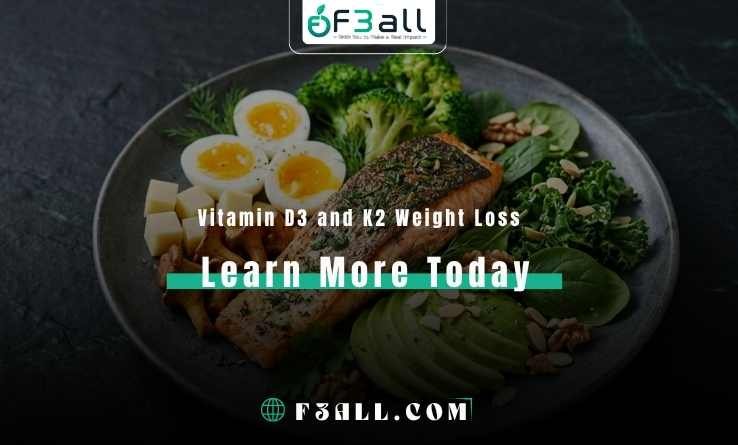
Food Sources of Vitamin D3 and Vitamin K2
Although supplements are widely available, many people can obtain important nutrients through a balanced diet.
Natural food sources include:
- Fatty fish.
- Egg yolks.
- Fortified dairy products.
- Cheese.
- Yogurt.
- Fermented foods that naturally contain Vitamin K2.
Combining nutritious foods with appropriate sunlight exposure, when suitable, also supports healthy Vitamin D status.
Read more about:Discover Sugar Free Gelatin for Weight Loss | F3all
When Supplementation May Be Helpful
Vitamin supplements are not necessary for everyone.
Healthcare professionals may recommend supplementation for individuals with confirmed deficiencies or increased nutritional needs.
Before taking supplements, it is important to consider:
- Blood test results.
- Overall diet quality.
- Existing medical conditions.
- Current medications.
- Professional medical advice.
Individual nutritional needs vary significantly.
Building a Healthy Lifestyle Beyond Supplements
Supplements should support healthy habits—not replace them.
Long-term wellness is built through:
| Healthy Habit | Benefit |
| Balanced Nutrition | Provides essential nutrients |
| Regular Exercise | Supports body composition |
| Quality Sleep | Helps overall recovery |
| Hydration | Supports normal body function |
| Stress Management | Encourages healthy routines |
These lifestyle factors remain the foundation of successful weight management.
Can Vitamins Replace Healthy Eating?
Many people hope that supplements can compensate for poor dietary habits.
The answer is no.
Whole foods provide:
- Fiber.
- Protein.
- Healthy fats.
- Vitamins.
- Minerals.
- Antioxidants.
These nutrients work together in ways that supplements alone cannot fully replace.
Read more about:Discover Sugar Free Gelatin for Weight Loss | F3all
Maintaining Healthy Body Weight
Achieving and maintaining a healthy body weight depends on consistent daily habits.
Important strategies include:
- Eating balanced meals.
- Monitoring portion sizes.
- Staying physically active.
- Drinking enough water.
- Sleeping well.
These routines contribute much more to long-term success than any individual supplement.
Understanding Nutrient Deficiencies
Vitamin deficiencies should never be self-diagnosed.
Symptoms may vary between individuals and sometimes overlap with many other health conditions.
Healthcare professionals can determine whether testing or supplementation is appropriate based on medical history and individual circumstances.
Common Myths About Vitamin D3 and K2
Many misconceptions continue to circulate online.
Myth: Vitamin D3 Directly Burns Body Fat
Vitamin D supports many important body functions, but it has not been shown to directly burn stored body fat.
Myth: Vitamin K2 Causes Weight Loss
Vitamin K2 supports normal calcium metabolism but is not a fat-burning supplement.
Myth: More Supplements Produce Better Results
Taking excessive amounts of vitamins does not improve weight-loss results and may increase the risk of unwanted effects.
Myth: Supplements Replace Exercise
Regular physical activity remains one of the most important components of long-term health and weight management.
Myth: Everyone Needs Vitamin D3 and K2 Supplements
Supplement needs vary from person to person and should ideally be based on individual nutritional status and professional medical guidance.
Read more about:Discover Sugar Free Gelatin for Weight Loss | F3all
Why F3all Is Your Best Choice

At F3all, we believe nutrition should be guided by scientific evidence rather than exaggerated supplement claims. We help you understand Vitamin D3 and K2 Weight Loss through evidence-based education that explains the true role of these nutrients in supporting overall health while maintaining realistic expectations. Instead of promoting supplements as quick solutions, we show how Vitamin D3 and K2 Weight Loss fits within a healthy lifestyle that includes balanced nutrition, regular exercise, quality sleep, and sustainable daily habits.
Our goal is to provide reliable educational content that helps readers understand how vitamins and nutrients support the body while encouraging informed decisions based on science rather than marketing claims.
Why people choose F3all:
- Science-based nutrition education.
- Practical healthy lifestyle guidance.
- Sustainable strategies for Vitamin D3 and K2 Weight Loss.
- Evidence-based supplement information.
- Long-term wellness support.
- Reliable educational resources for healthier living.
Whether you’re researching Vitamin D3 and K2 Weight Loss or learning more about healthy nutrition and supplementation, F3all provides practical, evidence-based guidance that supports lasting wellness and informed lifestyle choices.
Frequently Asked Questions
Does Vitamin D3 and K2 Weight Loss really work?
Vitamin D3 and K2 Weight Loss should not be viewed as a fat-burning solution. These vitamins support important body functions, but sustainable weight loss still depends on balanced nutrition, physical activity, and maintaining a calorie deficit.
Can Vitamin D deficiency affect body weight?
Some studies have found an association between low Vitamin D levels and obesity, but correcting a deficiency alone does not guarantee weight loss.
What does Vitamin K2 do?
Vitamin K2 supports normal calcium utilization and contributes to bone and cardiovascular health.
Should I take Vitamin D3 and K2 together?
Some people take them together because they have complementary roles in calcium metabolism, but supplementation should be based on individual needs and professional guidance.
Can supplements replace healthy eating?
No. Whole foods provide a wide variety of nutrients that supplements cannot completely replace.
Which foods naturally contain Vitamin D?
Fatty fish, egg yolks, fortified dairy products, and certain fortified foods are common dietary sources.
Does Vitamin D improve metabolism?
Vitamin D supports normal metabolic functions, but it has not been proven to directly increase fat burning.
Should everyone take Vitamin D supplements?
Not necessarily. Supplementation depends on factors such as dietary intake, sunlight exposure, blood levels, and medical advice.
Are high doses better for weight loss?
No. Taking more than recommended does not increase fat loss and may not be appropriate without professional supervision.
Why choose F3all for Vitamin D3 and K2 Weight Loss?
F3all provides evidence-based education on Vitamin D3 and K2 Weight Loss, helping individuals understand supplements, build healthier eating habits, and achieve sustainable wellness through practical lifestyle strategies.
In the End
Understanding Vitamin D3 and K2 Weight Loss begins with recognizing the true role these nutrients play in overall health. While Vitamin D3 and Vitamin K2 support important functions such as bone health, calcium metabolism, and normal body processes, they are not stand-alone weight-loss solutions. Lasting fat loss is achieved through balanced nutrition, regular physical activity, healthy sleep, proper hydration, and consistent lifestyle habits. At F3all, we believe Vitamin D3 and K2 Weight Loss should be viewed as part of a science-based wellness approach built on informed decisions, sustainable routines, and healthy daily habits that support long-term health and successful weight management.
Sources