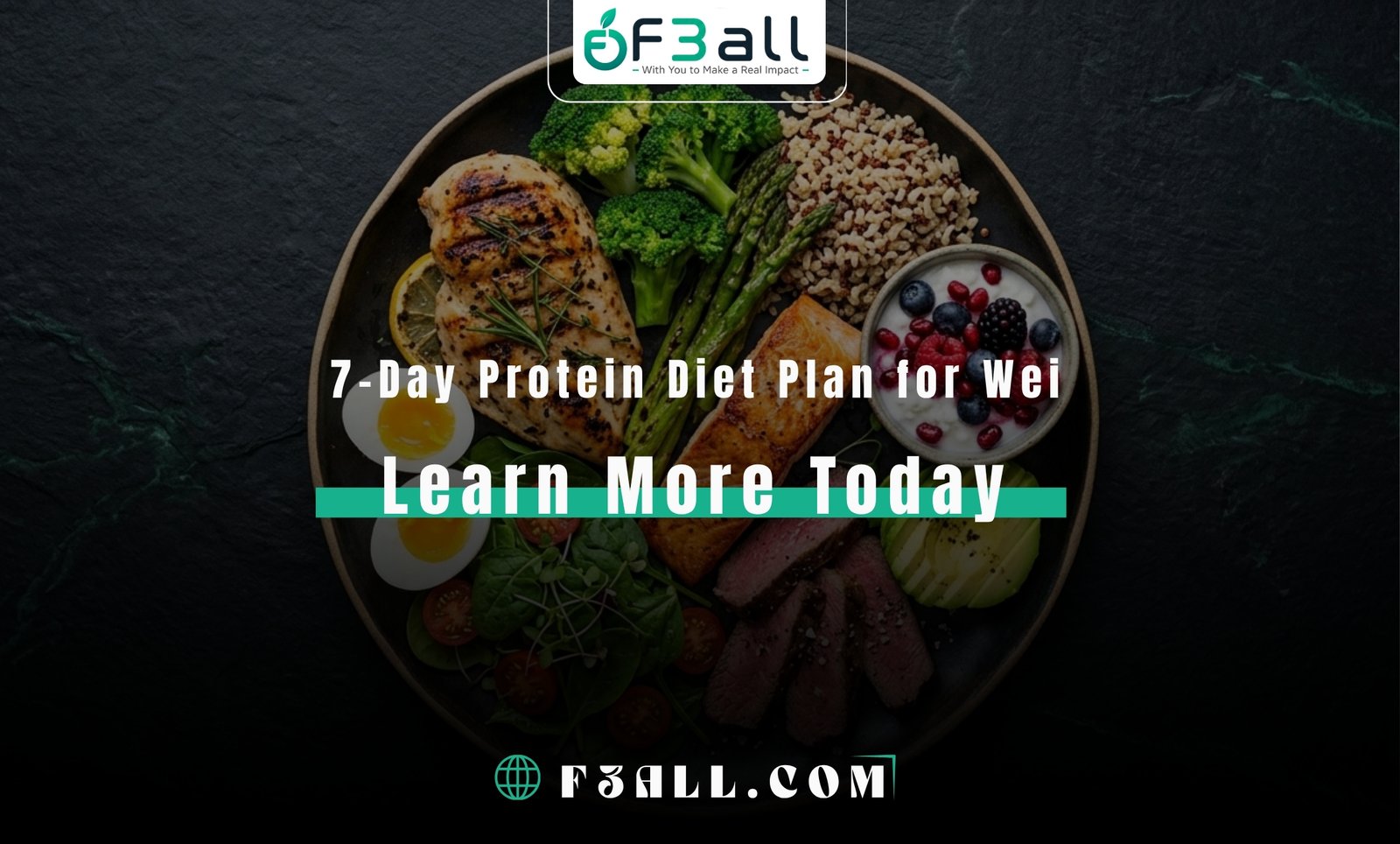
7-Day Protein Diet Plan for Weight Loss | F3all
7-Day Protein Diet Plan for Weight Loss is one of the most effective approaches for people looking to reduce body fat while preserving lean muscle and maintaining steady energy levels. A structured meal plan built around high-quality protein can improve satiety, simplify healthy eating, and support long-term weight management. This guide explains how a seven-day protein plan works, what foods to include, and how F3all promotes sustainable nutrition instead of restrictive dieting.
7-Day Protein Diet Plan for Weight Loss: A Practical Approach to Healthy Eating

Many weight-loss programs fail because they are too restrictive or difficult to maintain. Eliminating favorite foods, skipping meals, or relying on extreme calorie restriction often leads to frustration and poor long-term results.
A well-designed 7-Day Protein Diet Plan for Weight Loss takes a different approach. Instead of focusing only on reducing calories, it prioritizes protein-rich meals that help control hunger, preserve muscle mass, and make healthy eating more satisfying.
Protein plays an essential role in repairing tissues, supporting metabolism, and promoting fullness after meals. When combined with vegetables, healthy fats, and controlled portions of carbohydrates, it creates a nutrition plan that is easier to follow and maintain.
At F3all, we encourage realistic nutrition strategies that fit into everyday life rather than promoting temporary diet trends.
Why High-Protein Diets Support Weight Loss

Protein is often called the most satisfying macronutrient because it helps people feel full for longer than many high-carbohydrate foods.
Following a high protein diet 7 days may provide several advantages, including:
- Reduced hunger between meals.
- Better muscle preservation during weight loss.
- Increased feelings of fullness.
- Improved recovery after exercise.
- Better support for healthy metabolism.
These benefits make protein one of the most valuable nutrients when creating a sustainable weight-management plan.
How a Weekly Meal Plan Makes Dieting Easier
One of the biggest reasons diets fail is poor planning.
A weekly meal plan weight loss strategy removes daily guesswork by organizing meals before the week begins.
Planning meals in advance helps:
- Reduce unhealthy food choices.
- Control portion sizes.
- Save preparation time.
- Simplify grocery shopping.
- Improve dietary consistency.
When healthy meals are already prepared, it becomes much easier to stay on track even during busy weeks.
Read more about:Green Tea with Matcha Weight Loss | F3all
Building a Balanced Protein Cutting Diet Plan
A successful protein cutting diet plan focuses on reducing body fat while maintaining lean muscle.
Rather than dramatically reducing calories, it emphasizes nutrient-dense foods that provide lasting energy.
A balanced plate generally includes:
- Lean protein.
- High-fiber vegetables.
- Healthy fats.
- Controlled portions of carbohydrates.
This combination supports both weight loss and overall health.
Day 1: Building a Strong Start
Beginning with nutritious meals helps establish momentum for the rest of the week.
| Meal | Example |
| Breakfast | Greek yogurt with berries and chia seeds |
| Snack | Boiled eggs |
| Lunch | Grilled chicken, brown rice, broccoli |
| Snack | Cottage cheese |
| Dinner | Salmon with asparagus and salad |
The first day focuses on increasing protein intake while introducing balanced carbohydrates and vegetables.
Read more about:Green Tea with Matcha Weight Loss | F3all
Day 2: Maintaining Consistency
Consistency is more important than perfection.
Breakfast
Vegetable omelet with avocado.
Lunch
Turkey breast with quinoa and roasted vegetables.
Dinner
Grilled shrimp with mixed salad.
Healthy snacks may include:
- Greek yogurt.
- Almonds.
- Protein smoothie.
- Low-fat cheese.
Maintaining regular meal timing helps reduce unnecessary hunger throughout the day.
Day 3: Increasing Dietary Variety
Eating different protein sources prevents boredom and improves nutrient intake.
Examples include:
- Tuna.
- Lean beef.
- Chicken breast.
- Eggs.
- Fish.
- Tofu.
- Cottage cheese.
Variety also provides a wider range of vitamins and minerals.
Fat Loss Meal Schedule
Creating a structured fat loss meal schedule encourages consistency and appetite control.
A sample daily schedule could include:
| Time | Meal |
| 8:00 AM | Breakfast |
| 11:00 AM | Snack |
| 1:30 PM | Lunch |
| 4:30 PM | Snack |
| 7:00 PM | Dinner |
Meal timing can be adjusted according to personal preferences and lifestyle.
Day 4: Adding Healthy Carbohydrates
Contrary to popular belief, carbohydrates are not the enemy.
Whole-food carbohydrate sources provide energy for daily activity and exercise.
Healthy options include:
- Oats.
- Brown rice.
- Sweet potatoes.
- Quinoa.
- Whole-grain bread.
Balanced carbohydrate intake supports performance while maintaining a calorie deficit.
Read more about:Green Tea with Matcha Weight Loss | F3all
Keto Protein Diet Week: Is It Right for Everyone?
Some people consider following a keto protein diet week.
A ketogenic approach significantly reduces carbohydrate intake while increasing dietary fats.
Potential advantages include:
- Reduced appetite.
- Stable blood sugar for some individuals.
- Simpler meal choices.
However, keto is not the only effective approach for weight loss. The best nutrition plan is one that can be maintained consistently over time.
Day 5: Focusing on Lean Protein
Protein-rich foods provide essential amino acids that support muscle preservation during weight loss.
Excellent choices include:
- Chicken breast.
- Turkey.
- White fish.
- Eggs.
- Greek yogurt.
- Low-fat cottage cheese.
Choosing lean protein helps reduce unnecessary calorie intake while maintaining nutritional quality.
Rapid Weight Loss Diet Plan: Setting Realistic Expectations
Many people search for a rapid weight loss diet plan, hoping to see immediate results.
Although initial weight loss may occur quickly due to changes in water balance, sustainable fat loss is usually gradual.
Healthy progress generally comes from:
- Moderate calorie reduction.
- Consistent physical activity.
- Balanced nutrition.
- Long-term habit formation.
Slow, steady progress is more likely to produce lasting results than extreme dieting.
Structured Meal Prep Plan
A structured meal prep plan makes healthy eating significantly easier.
Meal preparation may include:
- Cooking protein in bulk.
- Washing vegetables ahead of time.
- Preparing healthy snacks.
- Measuring meal portions.
- Organizing weekly grocery shopping.
These simple habits reduce decision fatigue and improve dietary consistency.
Read more about:Green Tea with Matcha Weight Loss | F3all
Bodybuilding Diet Fat Loss Principles
Many nutrition strategies used in bodybuilding diet fat loss programs can benefit anyone trying to improve body composition.
These principles include:
- High protein intake.
- Progressive strength training.
- Portion control.
- Consistent meal timing.
- Adequate hydration.
Even individuals who never plan to compete in bodybuilding can benefit from these evidence-based nutrition habits.
Low Carb Protein Plan
A balanced low carb protein plan may help some individuals control appetite while maintaining stable energy levels.
Popular foods include:
- Eggs.
- Chicken.
- Fish.
- Lean beef.
- Cottage cheese.
- Green vegetables.
- Nuts.
Rather than eliminating carbohydrates completely, many people simply reduce refined carbohydrates while emphasizing whole foods.
Diet Chart for Weight Loss
A practical diet chart for weight loss focuses on consistency rather than perfection.
| Meal | Recommended Foods |
| Breakfast | Eggs, Greek yogurt, berries |
| Snack | Protein shake |
| Lunch | Chicken, rice, vegetables |
| Snack | Cottage cheese and cucumber |
| Dinner | Fish, salad, avocado |
A structured eating plan reduces impulsive food choices and helps maintain a healthy calorie intake.
Read more about:Green Tea with Matcha Weight Loss | F3all
Day 6: Staying Motivated Without Feeling Restricted
By the sixth day, many people begin noticing improvements in energy levels and appetite control. Rather than thinking of healthy eating as a temporary challenge, this stage is an excellent opportunity to reinforce habits that can continue long after the seven-day plan ends.
Breakfast
Scrambled eggs with spinach and whole-grain toast.
Morning Snack
Greek yogurt with a handful of blueberries.
Lunch
Grilled chicken breast with roasted sweet potatoes and steamed broccoli.
Afternoon Snack
Cottage cheese with cucumber slices.
Dinner
Grilled salmon with asparagus and mixed green salad.
Choosing satisfying meals helps reduce cravings while making the plan easier to maintain.
Day 7: Finishing the Week Strong
The final day is not the end of the journey. Instead, it serves as the foundation for creating healthier long-term eating habits.
Breakfast
Protein smoothie made with Greek yogurt, berries, spinach, and unsweetened almond milk.
Morning Snack
Boiled eggs.
Lunch
Turkey breast with brown rice and mixed vegetables.
Afternoon Snack
Mixed nuts in a controlled portion.
Dinner
Grilled white fish with roasted vegetables and avocado.
After completing the week, review which meals you enjoyed most and include them in your future meal planning.
Smart Grocery List for a High-Protein Week
Shopping with a prepared list helps avoid impulse purchases and keeps healthy ingredients available throughout the week.
Lean Protein
- Chicken breast
- Turkey breast
- Salmon
- Tuna
- Eggs
- Greek yogurt
- Cottage cheese
- Lean beef
- Shrimp
- Tofu
Healthy Carbohydrates
- Brown rice
- Quinoa
- Oats
- Sweet potatoes
- Whole-grain bread
Vegetables
- Spinach
- Broccoli
- Bell peppers
- Cucumbers
- Lettuce
- Zucchini
- Green beans
- Asparagus
Healthy Fats
- Avocados
- Olive oil
- Almonds
- Walnuts
- Chia seeds
- Flaxseeds
Planning grocery shopping in advance saves time and makes healthy eating much more convenient.
Meal Prep Tips That Save Time
Preparing meals ahead of time is one of the simplest ways to remain consistent.
Helpful meal-prep strategies include:
- Cooking several servings of protein at once.
- Preparing vegetables in advance.
- Portioning meals into individual containers.
- Keeping healthy snacks ready.
- Freezing extra meals for busy days.
Even one hour of meal preparation each week can make healthy eating significantly easier.
Best Drinks to Pair with a High-Protein Diet
Hydration is an important part of every successful nutrition plan.
Good beverage choices include:
- Water.
- Sparkling water without added sugar.
- Green tea.
- Black coffee in moderation.
- Herbal tea.
- Electrolyte drinks without added sugar when appropriate.
Avoid regularly consuming:
- Sugary soft drinks.
- Sweetened coffee beverages.
- Energy drinks with excessive sugar.
- Fruit juices in large quantities.
Choosing healthier beverages helps reduce unnecessary calorie intake.
Foods That Support Long-Term Fat Loss
Building meals around nutrient-dense foods improves both health and sustainability.
Excellent choices include:
| Food Category | Recommended Options |
| Protein | Chicken, fish, eggs, Greek yogurt |
| Vegetables | Broccoli, spinach, kale, peppers |
| Healthy Fats | Avocado, nuts, olive oil |
| Carbohydrates | Oats, quinoa, brown rice, sweet potatoes |
| Snacks | Cottage cheese, boiled eggs, nuts |
These foods provide vitamins, minerals, protein, and fiber that help support healthy weight management.
Common Mistakes That Slow Progress
Many people unknowingly make mistakes that reduce the effectiveness of even the best meal plans.
Some of the most common include:
- Skipping meals.
- Eating too little protein.
- Drinking calories instead of water.
- Ignoring portion sizes.
- Snacking mindlessly.
- Sleeping too little.
- Depending on cheat days to reward progress.
- Expecting immediate results.
Recognizing these habits makes it easier to build a healthier routine.
Healthy Habits Beyond the First Seven Days
A seven-day nutrition plan should be viewed as a starting point rather than a finish line.
After completing the first week, continue focusing on:
- Balanced meals.
- Regular exercise.
- Consistent meal timing.
- Hydration.
- Strength training.
- Weekly meal preparation.
- Quality sleep.
- Stress management.
These long-term habits produce much greater results than repeatedly starting short-term diets.
Why F3all Is Your Best Choice

Creating healthier eating habits requires more than following a meal schedule—it requires understanding how nutrition works and learning how to make sustainable choices every day. At F3all, we help you get the most from a 7-Day Protein Diet Plan for Weight Loss by focusing on evidence-based nutrition, balanced meal planning, and realistic lifestyle habits instead of temporary dieting trends. Our approach makes a 7-Day Protein Diet Plan for Weight Loss the beginning of a healthier lifestyle rather than just a one-week challenge.
Why choose F3all?
- Personalized wellness education.
- Science-backed nutrition recommendations.
- Practical guidance for a 7-Day Protein Diet Plan for Weight Loss.
- Sustainable fat-loss strategies.
- Long-term health-focused resources.
- Trusted information designed to support lasting lifestyle improvements.
Whether you’re beginning your first 7-Day Protein Diet Plan for Weight Loss or looking to improve an existing nutrition routine, F3all provides practical, evidence-based guidance that supports healthier living every step of the way.
Frequently Asked Questions
Is a 7-Day Protein Diet Plan for Weight Loss enough to lose fat?
A 7-Day Protein Diet Plan for Weight Loss is an excellent starting point for building healthier habits. Long-term fat loss depends on maintaining balanced nutrition, regular physical activity, and consistency over time rather than expecting permanent results from one week alone.
How much protein should I eat each day?
Protein requirements vary depending on body weight, activity level, age, and personal goals. Many active individuals benefit from spreading protein intake evenly across all meals.
Can I eat carbohydrates during a high-protein diet?
Yes. Whole-food carbohydrates such as oats, brown rice, quinoa, and sweet potatoes provide energy and fit well into balanced weight-loss plans when portions are controlled.
Is meal preparation necessary?
Meal preparation is not mandatory, but it makes healthy eating much easier by reducing impulsive food choices and saving time during busy days.
Can vegetarians follow a protein diet?
Absolutely. Protein sources such as tofu, tempeh, legumes, cottage cheese, Greek yogurt, eggs, and plant-based protein powders can support a vegetarian meal plan.
Should I exercise while following this plan?
Combining balanced nutrition with resistance training, walking, or other physical activity generally produces better long-term results than relying on nutrition alone.
Can I repeat the seven-day plan?
Yes. Many people use the meal structure as a foundation while introducing new healthy recipes to increase variety and maintain motivation.
What if I feel hungry between meals?
Choose protein-rich snacks such as Greek yogurt, boiled eggs, cottage cheese, or a handful of nuts while continuing to monitor your overall calorie intake.
Does a high-protein diet help preserve muscle?
Yes. Adequate protein intake, especially when combined with strength training, helps maintain lean muscle mass during weight loss.
Why choose F3all for a 7-Day Protein Diet Plan for Weight Loss?
F3all promotes sustainable wellness through evidence-based nutrition education, practical meal-planning strategies, and long-term lifestyle guidance that helps individuals succeed with a 7-Day Protein Diet Plan for Weight Loss without following unrealistic or restrictive diets.
In the End
A 7-Day Protein Diet Plan for Weight Loss is more than a short-term nutrition strategy—it is an opportunity to establish healthier habits that can support long-lasting results. By prioritizing high-quality protein, balanced meals, portion control, hydration, and regular physical activity, you create a foundation for sustainable fat loss while preserving lean muscle and improving overall well-being. At F3all, we believe successful weight management comes from consistency, education, and realistic lifestyle changes rather than extreme dieting. With the right approach, your first seven days can become the beginning of a healthier future.
Sources