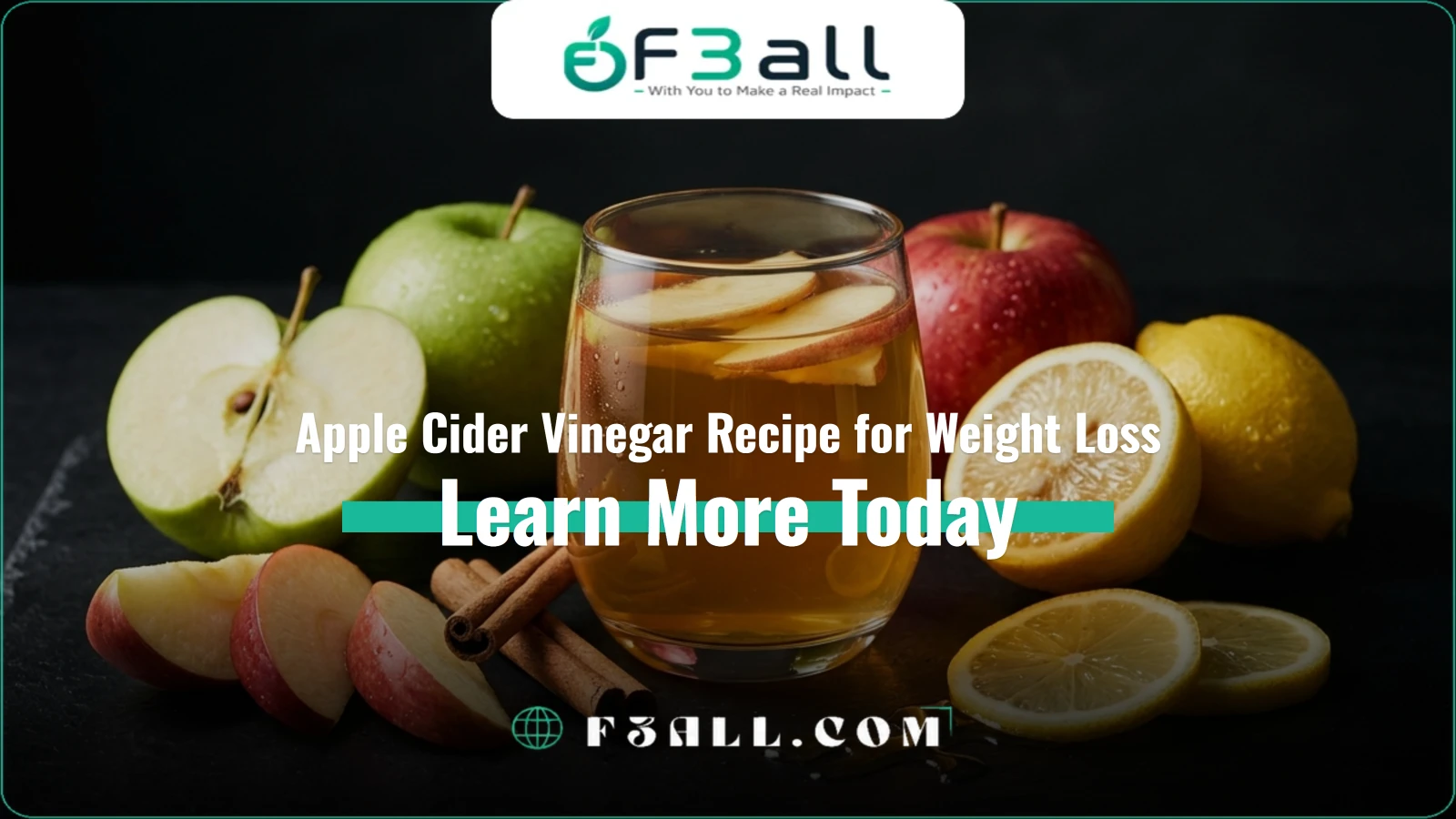
Apple Cider Vinegar Recipe for Weight Loss | Get Recipe
Apple Cider Vinegar Recipe for Weight Loss is a popular homemade drink made by diluting apple cider vinegar in water, sometimes with lemon or cinnamon for flavor. Although it is frequently promoted as a natural fat-burning solution, scientific evidence does not establish that apple cider vinegar produces substantial or lasting weight loss. Its main appeal is that it is inexpensive, easy to prepare, and low in calories when made without added sugar.
In this guide, you will discover the recipe, exact measurements, nutrition facts, flavor variations, preparation tips, a seven-day routine, realistic results, and important safety considerations.
Apple Cider Vinegar Recipe for Weight Loss – Ingredients and Measurements

The simplest Apple Cider Vinegar Recipe for Weight Loss requires only two ingredients: apple cider vinegar and water.
Additional ingredients can improve the flavor, but they are not necessary for the basic recipe.
The most important preparation principle is dilution. Drinking undiluted vinegar can irritate the throat and damage tooth enamel.
Ingredients for One Serving
| Ingredient | Quantity | Purpose |
| Apple cider vinegar | 1 teaspoon (5 ml) | Provides vinegar flavor and acetic acid |
| Water | 1 cup (240 ml) | Dilutes the vinegar |
| Fresh lemon juice | 1 teaspoon, optional | Adds citrus flavor |
| Ground cinnamon | A small pinch, optional | Adds aroma without added sugar |
| Ice cubes | As desired | Makes the drink refreshing |
Preparation time: 2–3 minutes.
Servings: 1.
Estimated calories: Approximately 1–3 calories for the basic vinegar-and-water drink.
Equipment: Drinking glass and measuring spoon.
Why These Ingredients Work Together
Apple cider vinegar provides the characteristic acidic flavor.
Water reduces its concentration, making the drink less acidic than straight vinegar.
Lemon and cinnamon are optional flavor additions rather than proven weight-loss ingredients.
Choosing the Right Apple Cider Vinegar
Look for a food-grade product with a clearly labeled acidity level, commonly around 5%.
Products may be filtered or unfiltered.
Unfiltered varieties sometimes contain cloudy sediment known as the mother, which consists of material associated with fermentation.
There is no convincing evidence that vinegar containing the mother produces superior weight-loss results.
Important Serving Note
The amount of vinegar used in research varies, and there is no medically established weight-loss dose.
The one-teaspoon quantity in this recipe is a modest culinary amount, not a clinically validated treatment dose.
The best starting point is a simple, diluted recipe that fits your preferences without making unsupported fat-burning promises.
How to Make Apple Cider Vinegar Recipe for Weight Loss

Preparing the drink takes only a few minutes and does not require a blender or specialized equipment.
Step-by-Step Instructions
Step 1 – Measure the Water
Pour 240 ml of cool or room-temperature water into a glass.
Step 2 – Add Apple Cider Vinegar
Measure one teaspoon of apple cider vinegar.
Add it to the water.
Step 3 – Mix Thoroughly
Stir until the vinegar is evenly distributed.
Step 4 – Add Optional Flavor
If desired, add a small amount of lemon juice or a pinch of cinnamon.
Step 5 – Serve
Add ice cubes and enjoy as an occasional beverage, preferably alongside food rather than as a replacement for a meal.
Quick Recipe Card
| Recipe Detail | Information |
| Recipe Name | Diluted Apple Cider Vinegar Drink |
| Main Ingredients | Vinegar and water |
| Preparation | Stir and serve |
| Active Time | 2–3 minutes |
| Cooking Required | No |
| Added Sugar | None |
| Approximate Calories | 1–3 |
| Best Storage | Prepare fresh |
Tips for Better Flavor
- Use chilled water.
- Measure vinegar accurately.
- Add ice for a refreshing taste.
- Try a small pinch of cinnamon.
- Avoid adding large quantities of honey or syrup.
- Do not drink concentrated vinegar directly.
Can You Make It With Warm Water?
Yes. Warm water can be used, provided the drink is comfortable to consume.
However, warm water does not activate a special fat-burning effect.
Can You Make It Stronger?
A stronger mixture is not necessarily more effective.
Increasing vinegar concentration may increase acidity-related irritation and dental risks.
Accurate measurement and adequate dilution are more important than making the drink stronger.
Apple Cider Vinegar Ingredients for Weight Loss Explained

Understanding the ingredients helps distinguish their nutritional characteristics from marketing claims.
Apple Cider Vinegar
Apple cider vinegar is produced through fermentation.
Yeast converts sugars into alcohol, and acetic acid bacteria subsequently convert alcohol into acetic acid.
Acetic acid contributes to vinegar’s characteristic acidity.
Some small studies have investigated vinegar in relation to appetite, glucose responses, and body weight, but the evidence is insufficient to establish it as an effective weight-loss treatment.
Water
Water contributes no calories and is essential for hydration.
Replacing sugar-sweetened beverages with water may help reduce overall calorie intake.
This benefit does not require adding vinegar.
Lemon Juice
Lemon juice provides flavor and a small amount of vitamin C.
However, lemon is also acidic, so adding it increases the drink’s overall acidity.
Cinnamon
Cinnamon adds flavor without requiring sugar.
Research does not establish that a small amount of cinnamon in this drink causes meaningful fat loss.
Ingredient Comparison
| Ingredient | Nutritional Contribution | Weight-Loss Evidence |
| Apple Cider Vinegar | Acetic acid, minimal calories | Limited and uncertain |
| Water | Hydration | Useful alternative to sugary drinks |
| Lemon Juice | Flavor, small amounts of nutrients | No direct fat-burning effect |
| Cinnamon | Flavor | No proven effect at recipe quantities |
| Honey | Sweetness and calories | No special fat-loss benefit |
Does Raw Vinegar Work Better?
There is no established evidence that raw, organic, or unfiltered apple cider vinegar produces greater weight reduction than standard food-grade vinegar.
Is Organic Vinegar Necessary?
Organic certification concerns production practices.
It does not establish superior weight-loss effectiveness.
Ingredient quality matters for food safety and taste, but no particular vinegar variety has been proven to deliver dramatic weight-loss results.
Apple Cider Vinegar Calories and Nutrition Facts
One reason the Apple Cider Vinegar Recipe for Weight Loss attracts attention is its low calorie content.
Plain apple cider vinegar contains relatively few calories, and water adds none.
However, calories can increase when honey, juice, or other sweeteners are added.
Estimated Calories by Ingredient
| Ingredient | Quantity | Approximate Calories |
| Apple cider vinegar | 1 teaspoon | 1 |
| Water | 240 ml | 0 |
| Lemon juice | 1 teaspoon | 1 |
| Cinnamon | Small pinch | Negligible |
| Honey | 1 teaspoon | 21 |
| Maple syrup | 1 teaspoon | 17 |
| Apple juice | ½ cup | 55–60 |
Actual values depend on product and measurement.
Nutrition Facts for the Basic Drink
| Nutrient | Approximate Amount |
| Calories | 1–3 kcal |
| Protein | 0 g |
| Fat | 0 g |
| Carbohydrates | Less than 1 g |
| Fiber | 0 g |
| Added Sugar | 0 g |
| Water | Approximately 240 ml |
What Happens When You Add Honey?
Adding one teaspoon of honey increases the drink by approximately 21 calories.
A tablespoon contributes around 64 calories.
Honey is not inherently forbidden, but it changes the calorie content.
Comparison With Other Drinks
| Beverage | Approximate Calories |
| Diluted Apple Cider Vinegar Drink | 1–3 |
| Plain Water | 0 |
| Unsweetened Tea | 0–3 |
| Black Coffee | 0–5 |
| Apple Juice, 1 Cup | 110–120 |
| Regular Soda, 12 oz | 140–160 |
These are typical estimates rather than exact values for every product.
Does Low Calorie Mean Weight Loss?
Not automatically.
A low-calorie beverage may fit into a calorie-conscious diet, but drinking it does not independently create a sustained energy deficit.
The drink’s clearest nutritional advantage is its low calorie content when prepared without added sugar.
Read more about: Weight Loss Gelatin Recipe | Get the Easy Recipe
Healthy Apple Cider Vinegar Recipe Variations
A healthy Apple Cider Vinegar Recipe can be adapted to different flavor preferences without adding large amounts of sugar.
The following variations use small amounts of vinegar diluted in water.
They are beverage ideas, not different medical treatments.
Variation 1 – Classic Diluted Vinegar Drink
Ingredients
- 1 teaspoon apple cider vinegar.
- 1 cup water.
Preparation
Mix thoroughly and serve chilled.
Estimated Calories: 1–3 kcal.
Variation 2 – Apple Cider Vinegar With Cinnamon
Ingredients
- 1 teaspoon apple cider vinegar.
- 1 cup water.
- A small pinch of cinnamon.
Preparation
Stir the vinegar into the water.
Add cinnamon and mix.
Estimated Calories: Approximately 2–4 kcal.
Variation 3 – Apple Cider Vinegar With Cucumber
Ingredients
- 1 teaspoon apple cider vinegar.
- 1 cup water.
- 2 thin cucumber slices.
Preparation
Combine the ingredients.
Allow the cucumber to infuse briefly before drinking.
Estimated Calories: Approximately 2–5 kcal.
Variation 4 – Apple Cider Vinegar With Mint
Ingredients
- 1 teaspoon apple cider vinegar.
- 1 cup water.
- 2–3 fresh mint leaves.
Preparation
Wash the mint leaves.
Add them to the diluted vinegar mixture.
Serve chilled.
Estimated Calories: Approximately 1–3 kcal.
Variation 5 – Apple Cider Vinegar With Lemon
Ingredients
- 1 teaspoon apple cider vinegar.
- 1 cup water.
- 1 teaspoon lemon juice.
Preparation
Combine all ingredients and stir.
Estimated Calories: Approximately 2–4 kcal.
Because both lemon and vinegar are acidic, this variation may be less suitable for people sensitive to acidic beverages.
Recipe Variation Comparison
| Variation | Flavor Profile | Estimated Calories |
| Classic | Tart | 1–3 |
| Cinnamon | Warm and aromatic | 2–4 |
| Cucumber | Mild and refreshing | 2–5 |
| Mint | Fresh | 1–3 |
| Lemon | Strong citrus | 2–4 |
Which Variation Is Best?
The best option is the one you enjoy and tolerate comfortably.
No variation has been shown to outperform the others for weight loss.
Flavor variations can make the drink more enjoyable, but their ingredients do not create a proven fat-burning combination.
Low Calorie Apple Cider Vinegar Recipe
A Low Calorie Apple Cider Vinegar drink is straightforward to prepare because the basic ingredients contribute very little energy.
However, it is important to distinguish low-calorie beverages from nutritionally complete foods.
Basic Low-Calorie Recipe
Combine:
- 1 teaspoon apple cider vinegar.
- 240 ml water.
- Ice cubes, optional.
Stir and serve.
How to Keep Calories Low
- Avoid adding honey or syrup.
- Use water instead of fruit juice.
- Choose herbs for flavor.
- Measure ingredients accurately.
- Avoid sweetened beverage mixes.
Low-Calorie Flavoring Comparison
| Flavoring | Typical Calorie Impact |
| Mint Leaves | Minimal |
| Cucumber Slices | Minimal |
| Cinnamon Pinch | Minimal |
| Lemon Juice | Small |
| Honey | Adds calories |
| Fruit Juice | Adds calories |
Can This Drink Replace Breakfast?
No.
The drink provides almost no protein, fiber, essential fats, or meaningful energy.
Replacing breakfast or another meal with vinegar water can compromise nutritional intake.
Can You Drink It Instead of Soda?
Replacing a sugary soda with a lower-calorie beverage may reduce calorie intake.
However, plain water or unsweetened tea can achieve the same calorie-reduction goal without vinegar-related acidity.
Is It Better Than Lemon Water?
Neither beverage has a proven special fat-burning effect.
The choice depends on taste and tolerance, although both acidic beverages may affect tooth enamel.
A low-calorie vinegar drink may replace a sugary beverage, but it should never replace a balanced meal.
Apple Cider Vinegar Without Sugar
Preparing Apple Cider Vinegar Without Sugar is simple because the basic drink does not require a sweetener.
Some commercial apple cider vinegar drinks contain added sugar, fruit concentrates, or sweetened flavorings.
Checking labels is useful when buying ready-made products.
Sugar-Free Homemade Version
Ingredients
- 1 teaspoon apple cider vinegar.
- 1 cup water.
- Fresh mint, optional.
Preparation
Mix the vinegar and water.
Add mint if desired.
Serve chilled.
No Added Sugar vs Sugar-Free
A drink containing honey has added sugar.
A drink containing 100% fruit juice may contain naturally occurring sugars even if no sugar has been added.
The basic vinegar-and-water recipe contains negligible sugar.
Sweetener Comparison
| Ingredient | Adds Sugar? | Approximate Calories |
| Water | No | 0 |
| Mint | Negligible | Minimal |
| Cinnamon | Negligible | Minimal |
| Honey, 1 tsp | Yes | 21 |
| Maple Syrup, 1 tsp | Yes | 17 |
| Apple Juice, ½ cup | Contains Natural Sugars | 55–60 |
Should You Add Artificial Sweeteners?
Non-sugar sweeteners can provide sweetness without substantial calories, depending on the product.
However, they are not required, and their use does not make vinegar an effective weight-loss treatment.
Does Sugar-Free Vinegar Burn More Fat?
No.
Removing added sugar can reduce beverage calories, but it does not create a special metabolic effect.
A sugar-free recipe is useful for limiting added sugars, not for guaranteeing faster weight loss.
Apple Cider Vinegar Meal Prep and Storage
Apple Cider Vinegar Meal Prep is convenient because the recipe requires minimal preparation.
However, there is little reason to prepare large batches when a fresh serving takes only a few minutes.
Best Meal Prep Method
Keep the vinegar in its original container.
Measure and dilute a serving when needed.
This helps maintain consistent measurements and reduces storage complications.
Preparing Individual Portions
If you prefer preparing ingredients in advance:
- Wash reusable drinking containers.
- Measure water separately.
- Keep vinegar in its labeled bottle.
- Add vinegar only when ready to drink.
- Stir thoroughly.
Can You Make a Large Batch?
You can prepare a diluted mixture in advance, but refrigeration and clean storage containers are important, particularly when adding fresh herbs, cucumber, or fruit.
Do not assume that the vinegar concentration in a heavily diluted drink makes it shelf-stable.
Suggested Preparation Schedule
| Task | Suggested Timing |
| Purchase Ingredients | Weekly |
| Wash Herbs or Cucumber | Before Use |
| Measure Water | Daily |
| Add Vinegar | Before Drinking |
| Mix and Serve | Fresh |
| Clean Glassware | After Use |
Storage Considerations
- Keep vinegar in its original labeled bottle.
- Follow manufacturer storage instructions.
- Refrigerate prepared drinks containing fresh produce.
- Avoid storing diluted drinks at room temperature for prolonged periods.
- Discard mixtures with signs of spoilage.
Can You Freeze the Drink?
Freezing is unnecessary for this simple recipe.
Fresh preparation is generally easier.
Preparing the drink fresh helps maintain consistent dilution and avoids unnecessary storage concerns.
Apple Cider Vinegar 7 Day Plan
An Apple Cider Vinegar 7 Day Plan should focus on understanding the recipe and maintaining balanced eating habits.
There is no evidence that drinking vinegar for seven consecutive days produces a predictable amount of fat loss.
The following schedule is an optional beverage routine, not a seven-day weight-loss treatment.
Seven-Day Recipe Schedule
| Day | Beverage Option | Main Focus |
| Monday | Classic diluted vinegar | Learn the recipe |
| Tuesday | Cinnamon variation | Explore flavor |
| Wednesday | Plain water instead | Compare preferences |
| Thursday | Cucumber variation | Refreshing option |
| Friday | Mint variation | No added sugar |
| Saturday | Lemon variation, if tolerated | Flavor variety |
| Sunday | Preferred drink or plain water | Review the routine |
Day 1 – Try the Basic Recipe
Prepare one teaspoon of vinegar diluted in one cup of water.
Pay attention to taste and tolerance.
Day 2 – Explore Cinnamon Flavor
Add a small pinch of cinnamon.
Avoid adding sugar unnecessarily.
Day 3 – Choose Plain Water
Use plain water instead of vinegar.
This reinforces that vinegar is not required for hydration or weight management.
Day 4 – Try Cucumber
Add cucumber slices to the diluted mixture.
Day 5 – Use Fresh Mint
Prepare the mint variation.
Day 6 – Consider Lemon
If acidic drinks are comfortable for you, try a small amount of lemon juice.
Otherwise, choose plain water.
Day 7 – Evaluate the Experience
Review whether the drink was enjoyable, convenient, and well tolerated.
There is no need to continue if it causes discomfort.
Balanced Meals During the Seven Days
Continue eating:
- Protein-rich foods.
- Vegetables.
- Whole fruit.
- Whole grains.
- Legumes.
- Healthy fats.
- Adequate overall energy.
What the Seven-Day Plan Does Not Promise
It does not guarantee:
- Belly-fat reduction.
- A specific number of pounds lost.
- Detoxification.
- Appetite suppression.
- Improved metabolism.
- Permanent weight loss.
The seven-day schedule is a way to explore beverage preferences, not a medically established fat-loss program.
Read more about: Weight Loss Drink Recipe | Get 7 Easy Recipes Now
Apple Cider Vinegar Weight Loss Results – What Research Shows
Apple Cider Vinegar Weight Loss Results are frequently discussed online, but the scientific evidence is much less convincing than many promotional claims suggest.
Some small, short-term studies have reported changes in body weight or metabolic measurements.
However, study limitations make it difficult to determine whether vinegar produces meaningful, lasting weight loss.
Understanding the Evidence
Research has examined vinegar consumption in relation to:
- Body weight.
- Appetite.
- Blood glucose responses.
- Waist circumference.
- Lipid measurements.
Results are inconsistent, and many studies are small or short.
Important Research Limitations
- Small participant groups.
- Short study durations.
- Differences in vinegar quantities.
- Variation in dietary habits.
- Limited long-term follow-up.
- Difficulty separating vinegar effects from other lifestyle changes.
What Can Be Concluded?
Current evidence does not justify treating apple cider vinegar as a proven obesity treatment.
It should not replace evidence-based weight-management interventions.
Claims vs Evidence
| Popular Claim | Evidence-Based Assessment |
| Vinegar Melts Body Fat | Not established |
| Vinegar Guarantees Weight Loss | Not supported |
| Vinegar Eliminates Belly Fat | Not established |
| Vinegar May Influence Post-Meal Glucose | Limited evidence in some settings |
| Vinegar Replaces Diet and Exercise | No |
| Low-Calorie Drink Substitutions May Help | Possible |
| Long-Term Weight Loss Is Guaranteed | No |
What About Viral Weight-Loss Studies?
A widely circulated 2024 study reporting substantial weight loss from apple cider vinegar was subsequently retracted.
Its findings should not be relied upon as evidence that vinegar causes significant weight reduction.
Why Reviews Are Not Enough
A testimonial cannot establish that vinegar caused a person’s weight change.
Dietary changes, physical activity, medications, hydration, and other factors may contribute.
The most reliable conclusion is that apple cider vinegar has not been established as an effective stand-alone weight-loss treatment.
Does Apple Cider Vinegar Reduce Belly Fat?
Many people use the Apple Cider Vinegar Recipe for Weight Loss specifically to reduce abdominal fat.
However, there is no convincing evidence that vinegar selectively reduces fat around the stomach.
Understanding Belly Fat
Abdominal fat includes:
- Subcutaneous fat beneath the skin.
- Visceral fat located deeper around internal organs.
Visceral fat is associated with cardiometabolic health risks.
Can Vinegar Target Visceral Fat?
There is insufficient high-quality evidence to recommend vinegar as a treatment for visceral fat.
What Supports Overall Fat Reduction?
Evidence-based approaches generally include:
- Appropriate energy intake.
- Balanced nutrition.
- Regular aerobic activity.
- Resistance training.
- Adequate sleep.
- Individualized medical care when appropriate.
Belly-Fat Myths
| Claim | Reality |
| Vinegar Burns Belly Fat Overnight | Unsupported |
| Drinking Vinegar Before Bed Melts Fat | Unsupported |
| Lemon and Vinegar Detox Abdominal Fat | Unsupported |
| Overall Weight Loss May Reduce Abdominal Fat | Yes |
| Exercise Supports Body Composition | Yes |
| One Drink Targets Fat Distribution | No |
Why Waist Measurements May Change
Waist circumference can change because of fat loss, bloating, fluid balance, and digestive contents.
A short-term reduction does not necessarily indicate abdominal fat loss.
Apple cider vinegar is not a substitute for sustainable dietary and activity changes when addressing excess abdominal fat.
Best Time to Drink Apple Cider Vinegar for Weight Loss
There is no clinically established best time to drink apple cider vinegar for weight loss.
Claims that vinegar works better before breakfast, before bed, or on an empty stomach are not supported by strong evidence.
Before Breakfast
Some people prefer a morning routine.
However, drinking vinegar on an empty stomach may cause discomfort for certain individuals.
With Meals
If someone chooses to consume diluted vinegar, using it with food may be more comfortable than drinking it alone.
Vinegar is also commonly used in salad dressings and other foods.
Before Dinner
There is no reliable evidence that drinking vinegar before dinner guarantees reduced calorie intake.
Before Bed
Vinegar is not an established nighttime fat-burning drink.
Acidic beverages may worsen reflux symptoms in susceptible individuals.
Timing Comparison
| Time | Potential Consideration | Proven Weight-Loss Advantage |
| Morning | Convenient routine | No |
| Empty Stomach | May cause discomfort | No |
| With Food | Culinary use | No |
| Before Dinner | Personal preference | No |
| Before Bed | May aggravate reflux | No |
Is Drinking Vinegar Every Day Necessary?
No.
There is no established requirement to consume vinegar daily for weight management.
Can You Use Vinegar in Food Instead?
Yes.
Using vinegar in salad dressings or marinades is a practical culinary option.
It still does not create a proven fat-burning effect.
The best timing is based on comfort and preference, and there is no need to drink vinegar at all to manage body weight.
Best Apple Cider Vinegar for Weight Loss
The Best Apple Cider Vinegar for Weight Loss is often marketed as raw, organic, unfiltered, or containing the mother.
However, these labels do not establish superior weight-loss effectiveness.
Raw Apple Cider Vinegar
Raw vinegar may be minimally processed.
This does not prove it causes greater weight reduction.
Organic Apple Cider Vinegar
Organic certification relates to production standards.
It does not establish a special fat-burning benefit.
Filtered Apple Cider Vinegar
Filtered vinegar has a clearer appearance because suspended material has been removed.
Unfiltered Apple Cider Vinegar
Unfiltered vinegar may contain cloudy sediment.
Its appearance does not prove enhanced weight-loss results.
Product Type Comparison
| Type | Main Characteristic | Proven Superior for Weight Loss? |
| Raw | Minimally processed | No |
| Organic | Certified production standards | No |
| Filtered | Clearer appearance | No |
| Unfiltered | May contain sediment | No |
| With the Mother | Contains fermentation-related material | No |
What to Look for When Buying
Choose a product that has:
- Food-grade labeling.
- Clearly stated ingredients.
- Appropriate acidity information.
- Reliable manufacturer details.
- Suitable packaging.
- Relevant dietary certification if needed.
What About Apple Cider Vinegar Gummies?
Gummies may contain added sugar and different quantities of vinegar-related ingredients.
They should not be assumed to provide the same effects as liquid vinegar.
There is no convincing evidence that gummies produce meaningful weight loss.
Are Capsules Better?
Capsules and concentrated supplements can present additional concerns, including inconsistent formulation and irritation.
They should not be treated as proven weight-loss treatments.
Choose vinegar for culinary quality and personal preference rather than expecting a specific brand or processing method to accelerate fat loss.
Apple Cider Vinegar vs Other Weight-Loss Drinks
Comparing apple cider vinegar with other drinks can help clarify its actual role.
No ordinary beverage automatically produces significant fat loss.
Apple Cider Vinegar vs Lemon Water
Both are low-calorie when unsweetened.
Neither has been established as a direct fat-burning treatment.
Apple Cider Vinegar vs Green Tea
Unsweetened green tea contains very few calories.
Research on tea compounds and weight loss has produced limited or inconsistent findings, and clinically meaningful effects are not established for ordinary consumption.
Apple Cider Vinegar vs Plain Water
Plain water provides hydration without acidity.
It is generally the simplest everyday choice.
Apple Cider Vinegar vs Protein Smoothies
A balanced protein smoothie can provide protein, fiber, and energy.
A vinegar drink provides almost none of these nutrients.
Beverage Comparison
| Beverage | Approximate Calories | Main Role |
| Diluted Apple Cider Vinegar | 1–3 | Low-calorie flavored drink |
| Plain Water | 0 | Hydration |
| Lemon Water | 0–5 | Flavored hydration |
| Unsweetened Green Tea | 0–3 | Low-calorie beverage |
| Black Coffee | 0–5 | Caffeinated beverage |
| Protein Smoothie | Varies widely | Nutritional intake |
Which Is Best for Everyday Use?
Plain water is a straightforward option for hydration.
Unsweetened tea and coffee can also fit into many healthy eating patterns.
A protein smoothie may be useful when additional nutrients are needed.
Apple cider vinegar is optional, and its low calorie content does not make it more effective than other unsweetened drinks for weight loss.
Read more about: Salt and Ice Weight Loss Recipe | Get the Recipe
Apple Cider Vinegar Safety and Side Effects
Although apple cider vinegar is commonly used in food, concentrated or frequent consumption can create problems.
Dilution reduces acidity but does not eliminate all potential risks.
Tooth Enamel Erosion
Acidic beverages can contribute to dental erosion.
Avoid sipping vinegar drinks repeatedly over long periods.
Rinsing the mouth with plain water afterward may help reduce lingering acidity.
Do not brush immediately after consuming an acidic beverage; dental guidance generally recommends allowing time for enamel to recover.
Throat and Esophageal Irritation
Undiluted vinegar can irritate or injure sensitive tissues.
Never drink concentrated vinegar directly.
Digestive Discomfort
Vinegar may worsen nausea, reflux, or stomach discomfort in some individuals.
Delayed Gastric Emptying
Vinegar may influence gastric emptying, which can be relevant for people with certain digestive conditions, including gastroparesis.
Medication Considerations
People taking diabetes medications, diuretics, or other medications affecting glucose or potassium balance should discuss regular vinegar consumption with their healthcare professional.
Safety Overview
| Concern | Practical Precaution |
| Tooth Enamel | Avoid prolonged acid exposure |
| Throat Irritation | Never drink undiluted vinegar |
| Reflux | Avoid if symptoms worsen |
| Digestive Conditions | Seek individualized advice |
| Diabetes Medication | Discuss possible interactions |
| Potassium Concerns | Avoid excessive intake |
| Allergic or Adverse Reaction | Stop and seek advice |
Who Should Be Especially Careful?
- People with significant acid reflux.
- Individuals with swallowing difficulties.
- People with gastroparesis.
- Those taking glucose-lowering medications.
- People with kidney or electrolyte disorders.
- Individuals with a history of dental erosion.
Is Apple Cider Vinegar Safe During Pregnancy?
Normal culinary use of suitable food-grade vinegar differs from consuming concentrated vinegar as a supplement.
Pregnant individuals should avoid unproven weight-loss regimens and seek professional advice about dietary concerns.
Safety matters more than following a viral recipe, particularly because the weight-loss benefits of drinking vinegar remain unproven.
Common Mistakes When Preparing Apple Cider Vinegar Drinks
A few common mistakes can make the recipe unnecessarily acidic, higher in calories, or less practical.
Mistake 1 – Drinking Vinegar Undiluted
Concentrated vinegar can irritate the throat and damage teeth.
Better Approach: Always dilute vinegar before drinking.
Mistake 2 – Adding Too Much Honey
Honey increases calorie intake.
Better Approach: Use a measured amount if sweetness is desired.
Mistake 3 – Replacing Meals With Vinegar Water
The drink provides almost no essential nutrients.
Better Approach: Continue balanced meals.
Mistake 4 – Increasing Vinegar for Faster Results
More vinegar does not guarantee greater fat loss.
Better Approach: Avoid excessive consumption.
Mistake 5 – Ignoring Dental Health
Frequent exposure to acidic drinks may damage enamel.
Better Approach: Minimize unnecessary acid exposure.
Mistake 6 – Expecting a Seven-Day Transformation
There is no established seven-day vinegar weight-loss effect.
Better Approach: Focus on sustainable habits.
Mistake 7 – Believing Detox Claims
The body already has organs responsible for processing and eliminating waste products.
Vinegar has not been established as a detoxification treatment.
Better Approach: Prioritize ordinary nutrition and hydration.
Mistake Summary
| Mistake | Better Strategy |
| Undiluted Vinegar | Dilute properly |
| Excess Honey | Measure sweeteners |
| Meal Replacement | Eat balanced meals |
| Excessive Vinegar | Avoid high intake |
| Ignoring Teeth | Reduce acid exposure |
| Unrealistic Results | Use evidence-based goals |
| Detox Claims | Focus on overall health |
Avoiding these mistakes makes the recipe easier to prepare while reducing unnecessary risks.
How to Include Apple Cider Vinegar in a Balanced Weight-Loss Plan
Apple cider vinegar should be viewed as an optional ingredient rather than the foundation of a weight-loss program.
For people who would benefit from weight reduction, sustainable dietary and activity changes are generally more important.
Focus on Balanced Meals
Include:
- Vegetables.
- Whole fruit.
- Whole grains.
- Protein-rich foods.
- Legumes.
- Healthy fats.
Maintain Appropriate Energy Intake
Weight reduction generally requires an energy deficit over time.
The appropriate deficit depends on individual health and nutritional needs.
Include Physical Activity
For most adults, general guidelines recommend at least 150 minutes of moderate-intensity aerobic activity per week, plus muscle-strengthening activities on at least two days.
Prioritize Sleep
Adequate sleep supports general health and can influence appetite and eating behaviors.
Track Meaningful Progress
Consider:
- Weight trends when appropriate.
- Waist circumference.
- Physical endurance.
- Strength.
- Dietary quality.
- Relevant health markers.
Healthy Habit Comparison
| Habit | Potential Contribution |
| Balanced Nutrition | Supports nutritional health |
| Appropriate Calorie Intake | Supports weight management |
| Regular Walking | Improves activity levels |
| Resistance Training | Supports muscle maintenance |
| Adequate Sleep | Supports overall health |
| Hydration | Supports normal body function |
| Apple Cider Vinegar Drink | Optional low-calorie beverage |
Why Consistency Matters
Long-term changes in eating and activity habits are more likely to influence weight than a single ingredient.
If you enjoy diluted apple cider vinegar, it can remain an occasional beverage, but meaningful weight management does not depend on it.
Why F3all Is Your Best Choice

At F3all, the Apple Cider Vinegar Recipe for Weight Loss is explained through practical preparation steps, nutrition information, and realistic health guidance.
The goal is to help readers understand popular recipes without relying on exaggerated fat-burning or detox claims.
- Simple Recipe: Clear ingredient measurements and preparation steps.
- Calorie Information: Practical nutrition estimates.
- Flavor Variations: Cinnamon, cucumber, mint, and lemon options.
- Sugar-Free Guidance: Easy ways to avoid added sugar.
- Meal Prep Advice: Convenient preparation and storage recommendations.
- Seven-Day Schedule: A flexible beverage routine.
- Research Context: Realistic explanations of weight-loss evidence.
- Safety Guidance: Important information about acidity and potential side effects.
Explore more healthy recipes, nutrition tips, and weight-management information through F3all.
F3all helps readers make informed food choices by combining practical recipes with evidence-based explanations.
Frequently Asked Questions
What Is the Best Apple Cider Vinegar Recipe for Weight Loss?
A simple version combines one teaspoon of apple cider vinegar with one cup of water. However, this is a culinary recipe, not a proven weight-loss treatment.
Does Apple Cider Vinegar Really Help You Lose Weight?
Research is limited and inconsistent. There is insufficient reliable evidence that apple cider vinegar produces substantial or lasting weight loss.
How Many Calories Are in an Apple Cider Vinegar Drink?
A basic drink made with one teaspoon of vinegar and water contains approximately 1–3 calories. Added honey or juice increases the calorie content.
Can I Drink Apple Cider Vinegar Every Day?
Daily consumption is not necessary for weight management. Regular use may create problems for people with reflux, dental erosion, certain medical conditions, or medication interactions.
Is Apple Cider Vinegar Better in the Morning or at Night?
There is no established best time for weight loss. The choice should depend on comfort, and some people may need to avoid acidic beverages altogether.
Can Apple Cider Vinegar Burn Belly Fat?
No convincing evidence shows that apple cider vinegar selectively reduces abdominal fat.
Can I Make Apple Cider Vinegar Without Sugar?
Yes. Combine apple cider vinegar with water and avoid adding honey, syrup, or sweetened juice.
How Much Apple Cider Vinegar Should I Use in a Recipe?
This guide uses one teaspoon diluted in one cup of water. It is a modest culinary serving, not a medically established weight-loss dose.
Does Apple Cider Vinegar With Lemon Work Better?
There is no convincing evidence that combining vinegar with lemon improves fat loss. Both ingredients are acidic, which may increase irritation or dental concerns.
How Much Weight Can I Lose With Apple Cider Vinegar in Seven Days?
There is no reliable, predictable seven-day weight-loss result attributable to apple cider vinegar. Any weight changes may reflect diet, activity, hydration, and other factors.
In the End
The Apple Cider Vinegar Recipe for Weight Loss is an inexpensive, low-calorie drink that can be prepared with just vinegar and water.
Optional ingredients such as cinnamon, mint, cucumber, or lemon can add variety without requiring substantial added sugar.
However, apple cider vinegar is not a proven fat-burning ingredient, and scientific evidence does not establish that drinking it produces significant long-term weight loss.
The recipe should always be adequately diluted, and people with reflux, dental concerns, certain digestive conditions, or relevant medication use should be especially cautious.
For sustainable weight management, balanced nutrition, appropriate energy intake, physical activity, and consistent daily habits remain more important than any individual drink.
Try the simple recipe if you enjoy its flavor and tolerate it comfortably, but rely on evidence-based habits rather than vinegar for lasting weight-management results.
References