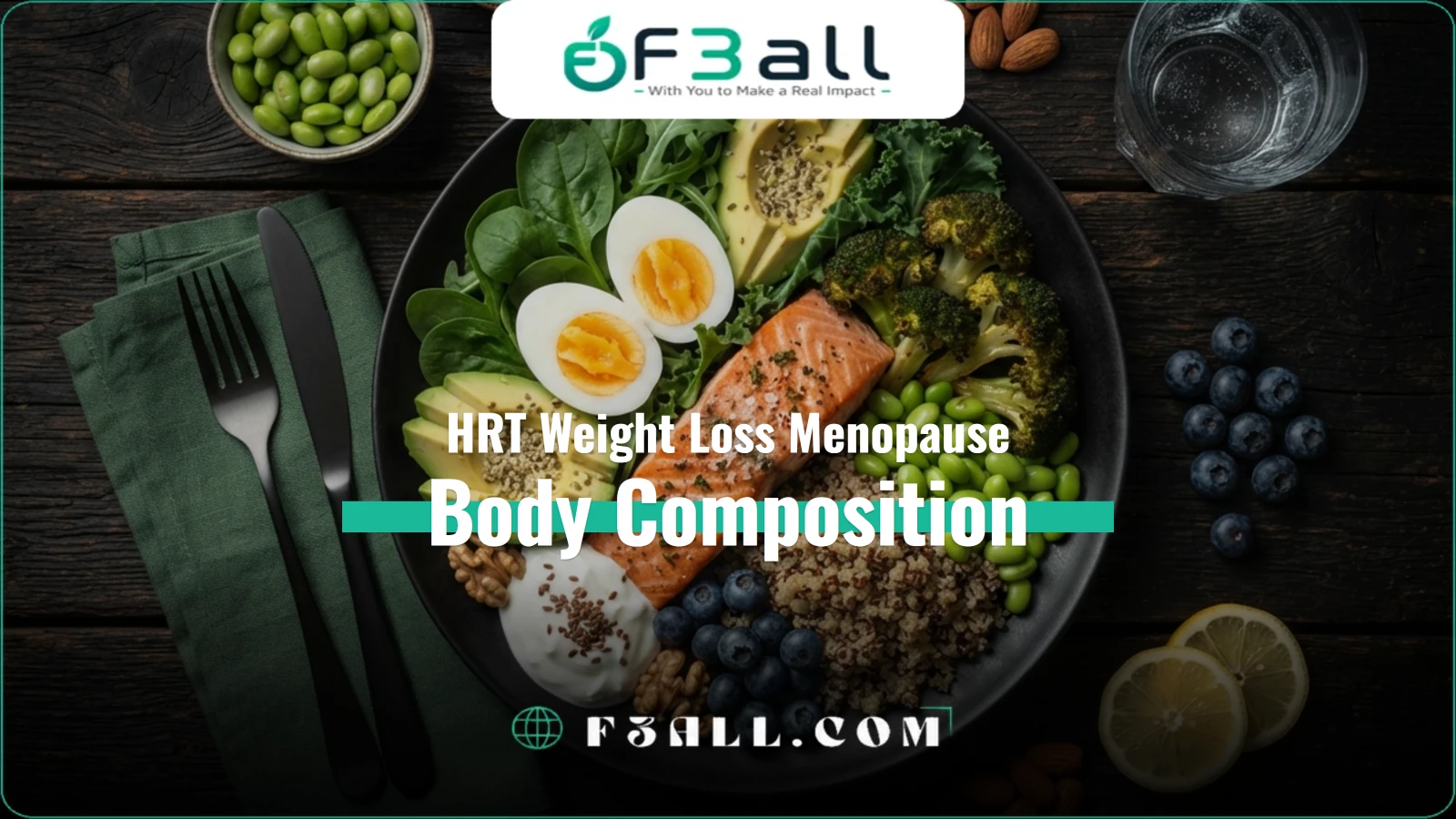
HRT Weight Loss | Menopause and Body Composition
HRT Weight Loss is often searched by people who notice that body weight, waist size, or fat distribution changes around menopause. Declining estrogen levels, aging, reduced muscle mass, sleep disruption, lower activity, and changes in appetite can all influence body composition during this stage. Hormone replacement therapy may improve specific menopause symptoms, but it should not be viewed as a weight-loss medication.
The most useful HRT Weight Loss strategy combines appropriate medical care with realistic nutrition, resistance training, adequate protein, daily movement, sleep, and calorie awareness. HRT may influence where fat is stored and may modestly affect body composition in some women, but meaningful fat loss still depends on the overall balance between food intake, activity, and long-term habits.
HRT Weight Loss: Does Hormone Therapy Help?

HRT Weight Loss does not work in the same way as an anti-obesity medication. Hormone replacement therapy is primarily used to manage appropriate menopausal symptoms and, in selected situations, protect bone health.
Menopause itself is associated with changes in body composition, including a tendency toward more central abdominal fat. HRT may reduce some of these menopause-related body-composition changes in certain women, but the effect on total body weight is generally modest.
| Factor | Possible Effect | What HRT May Do |
| Falling estrogen | Fat distribution may shift toward abdomen | May partly influence distribution |
| Aging | Energy needs may decrease | Does not reverse aging |
| Muscle loss | Lower lean mass can reduce expenditure | Does not replace strength training |
| Poor sleep from hot flashes | Can disrupt eating and activity | May help symptoms when appropriate |
| Calorie intake | Directly affects energy balance | Does not cancel excess calories |
| Low activity | Reduces daily expenditure | Does not replace movement |
What HRT Can and Cannot Do
HRT may:
- Reduce hot flashes and night sweats when appropriate.
- Improve sleep when menopause symptoms are disrupting it.
- Help some women maintain a more favorable body-fat distribution.
- Support quality of life during menopause.
HRT cannot:
- Selectively burn belly fat.
- Guarantee weight loss.
- Replace a calorie deficit.
- Replace strength training.
- Be prescribed solely as a routine weight-loss treatment.
The safest way to think about HRT Weight Loss is that symptom control may make healthy habits easier, while the actual fat-loss plan still needs nutrition and activity.
HRT and Belly Fat

HRT and belly fat are closely linked in online discussions because menopause often changes where fat is stored. Before menopause, women commonly store more fat around the hips and thighs. After menopause, abdominal and visceral fat can become more prominent.
This shift does not mean every kilogram gained during menopause is caused by estrogen alone.
| Contributor to Belly Fat | Can It Be Changed? | Practical Focus |
| Hormonal transition | Not completely | Appropriate menopause care |
| Total calorie intake | Yes | Portion awareness |
| Protein intake | Yes | Build meals around protein |
| Resistance training | Yes | Maintain or build muscle |
| Daily movement | Yes | Increase regular activity |
| Sleep | Often | Improve sleep routine |
| Genetics | No | Focus on controllable factors |
HRT Weight Loss should therefore target total body composition rather than searching for one treatment that removes abdominal fat specifically.
Does HRT Cause Weight Gain or Weight Loss?

HRT weight gain or loss is frequently misunderstood. Menopause commonly occurs during the same years when age-related changes in muscle, activity, sleep, and energy needs are occurring, so weight gain can easily be blamed entirely on hormone therapy.
HRT itself is not generally considered a major cause of fat gain. Some people may experience temporary bloating, breast fullness, or fluid changes after starting treatment, which can affect scale weight without representing substantial fat gain.
| Scale Change | Possible Explanation |
| Small early increase | Fluid or bloating |
| Waist increasing over months | Fat gain may be occurring |
| Weight unchanged, waist smaller | Body composition may improve |
| Weight decreasing | Likely energy deficit and lifestyle changes |
| Large unexplained change | Medical review may be appropriate |
A few pounds of scale change after starting treatment should not automatically be interpreted as fat gained from HRT.
Tracking trends over several weeks gives a much clearer picture of HRT Weight Loss than reacting to individual weigh-ins.
HRT Metabolism and Menopause
HRT metabolism claims are often exaggerated. Estrogen plays a role in many metabolic processes, but taking menopausal hormone therapy does not suddenly restore a younger metabolic rate.
Energy expenditure can change with age partly because muscle mass and physical activity often decline.
A simplified weight-management picture looks like this:
| Metabolic Factor | Menopause/Aging Effect | Practical Response |
| Lean muscle | May decline | Resistance training |
| Daily movement | May decrease | More walking and activity |
| Sleep | May worsen | Address menopause symptoms |
| Appetite | Can vary | Structured meals |
| Energy needs | May become somewhat lower | Adjust portions |
| Fat distribution | More abdominal storage possible | Overall fat-loss strategy |
HRT Weight Loss is therefore more effective when hormone care is combined with protecting muscle and maintaining daily activity.
Read more about: How to Use Chia for Weight Loss | Practical Guide
A Practical Menopause Weight Loss Diet
A menopause HRT weight loss plan should not require eliminating carbohydrates, fasting for extreme periods, or surviving on salads. The strongest diet is one that creates an appropriate calorie deficit while still supplying enough protein, fiber, vitamins, minerals, and food volume.
A balanced meal can include protein, vegetables, a measured carbohydrate source, and controlled dietary fat.
| Food | Weight | Carbs | Calories From Carbs | Protein | Total Calories |
| Chicken breast, cooked | 120 g | 0 g | 0 kcal | About 37 g | About 198 kcal |
| Brown rice, cooked | 100 g | 25.6 g | 102 kcal | About 2.7 g | About 123 kcal |
| Broccoli | 150 g | About 10.8 g | 43 kcal | About 3.6 g | About 53 kcal |
| Bell pepper | 100 g | About 6 g | 24 kcal | About 1 g | About 31 kcal |
| Olive oil | 5 g | 0 g | 0 kcal | 0 g | About 44 kcal |
| Total | 475 g | About 42.4 g | 170 kcal | About 44 g | About 449 kcal |
Calories From Carbs are estimated using approximately 4 calories per gram of carbohydrate. Total food calories also include protein and fat.
A Good Meal Building Order Is
- Choose the protein source first.
- Add 200–300 g vegetables when practical.
- Add a measured high-fiber carbohydrate.
- Measure oil, cheese, nuts, and other fats.
- Add fruit or yogurt according to your calorie needs.
Readers can explore more meal ideas through Delicious Diet Recipes.
A structured plate makes HRT Weight Loss far easier to manage than trying to compensate for menopause with extreme restriction.
Protein During Menopause
Protein becomes particularly useful during menopause because maintaining muscle can support strength, physical function, and body composition.
A higher-protein meal does not automatically create weight loss, but it can make a calorie-controlled diet easier to structure.
| Protein Source | Weight | Carbs | Calories From Carbs | Protein | Total Calories |
| Chicken breast | 120 g | 0 g | 0 kcal | About 37 g | About 198 kcal |
| Tuna in water | 100 g | 0 g | 0 kcal | About 25.5 g | About 116 kcal |
| Greek yogurt | 170 g | About 6 g | 24 kcal | About 17 g | About 100 kcal |
| Eggs | 100 g | About 0.7 g | 3 kcal | About 12.6 g | About 143 kcal |
| Lentils | 150 g | About 30.2 g | 121 kcal | About 13.5 g | About 174 kcal |
| Tofu | 100 g | About 2.8 g | 11 kcal | About 17 g | About 144 kcal |
Good meal combinations include:
- Greek yogurt with berries.
- Eggs with vegetables.
- Chicken with vegetables and brown rice.
- Tuna with salad.
- Lentils with yogurt and vegetables.
- Tofu with stir-fried vegetables.
Protein should support HRT Weight Loss by helping preserve lean mass rather than being treated as a hormone-balancing miracle food.
Fiber and High-Volume Foods
Fiber-rich foods can help make menopause weight loss meals more satisfying while providing important nutrients.
Vegetables, berries, fruit, legumes, oats, and whole grains are useful options.
| Food | Weight | Carbs | Calories From Carbs | Fiber | Total Calories |
| Strawberries | 200 g | About 15.4 g | 62 kcal | About 4 g | About 64 kcal |
| Broccoli | 200 g | About 14.4 g | 58 kcal | About 6.6 g | About 70 kcal |
| Lentils | 150 g | About 30.2 g | 121 kcal | About 11.9 g | About 174 kcal |
| Apple | 180 g | About 24.8 g | 99 kcal | About 4.3 g | About 95 kcal |
| Oatmeal, cooked | 150 g | About 18 g | 72 kcal | About 2.5 g | About 106 kcal |
High-volume foods can make an HRT Weight Loss plan feel far less restrictive than simply shrinking every meal.
Healthy Fats Need Measuring
Olive oil, avocado, nuts, and seeds can all fit into a healthy menopause diet, but their calories still matter.
Low carbohydrate does not automatically mean low calorie.
| Food | Weight | Carbs | Calories From Carbs | Total Calories |
| Olive oil | 5 g | 0 g | 0 kcal | About 44 kcal |
| Olive oil | 15 g | 0 g | 0 kcal | About 133 kcal |
| Avocado | 50 g | About 4.3 g | 17 kcal | About 80 kcal |
| Almonds | 20 g | About 4.3 g | 17 kcal | About 116 kcal |
| Peanut butter | 15 g | About 3 g | 12 kcal | About 88 kcal |
Pouring 15 g oil and adding 30 g nuts can contribute more than 300 calories without dramatically increasing the size of the meal.
HRT Weight Loss remains much easier when healthy fats are included deliberately rather than eaten without portions.
Strength Training and HRT Weight Loss
Resistance training is one of the most valuable forms of exercise during menopause because muscle mass becomes increasingly important for body composition and function.
Strength training does not make HRT work better directly, but both can be parts of an overall menopause health strategy.
| Training Type | Practical Starting Point | Main Benefit |
| Full-body strength | 2–3 times weekly | Muscle and strength |
| Walking | Most days | Daily energy expenditure |
| Cycling | 2–4 times weekly | Cardiovascular fitness |
| Swimming | As preferred | Low-impact cardio |
| Mobility | Several times weekly | Movement quality |
Exercises may include:
- Squats.
- Leg press.
- Rows.
- Chest presses.
- Shoulder presses.
- Hip thrusts.
- Deadlift variations.
- Pulldowns.
Progress resistance gradually according to fitness and health status.
HRT Weight Loss works far better when muscle preservation is treated as a priority rather than relying only on calorie cutting.
Read more about: How to Lose Loose Skin After Weight Loss | Real Options
Daily Movement Matters Too
A woman can exercise three times per week and still spend most of the remaining week sitting. Everyday movement can therefore be just as important as formal exercise for long-term weight management.
Useful strategies include:
- Walking after meals.
- Increasing daily steps gradually.
- Standing during some phone calls.
- Taking short movement breaks.
- Using stairs when practical.
- Walking instead of driving short distances when feasible.
| Activity Pattern | Possible Effect |
| Regular walking | Raises daily activity |
| Prolonged sitting | Reduces movement |
| Strength training | Supports lean mass |
| Short movement breaks | Adds activity across the day |
| Weekend-only exercise | May leave weekdays very inactive |
An HRT Weight Loss plan should therefore examine the whole week, not just gym sessions.
Sleep, Hot Flashes and Weight Management
Menopause symptoms can interfere with sleep, and poor sleep can make weight management harder by reducing energy, exercise consistency, and meal-planning quality.
If appropriately prescribed HRT improves night sweats or hot flashes, better sleep may indirectly make healthy habits easier.
| Sleep Problem | Possible Weight-Management Effect |
| Night sweats | Interrupted sleep |
| Frequent waking | Daytime fatigue |
| Poor sleep | Less physical activity |
| Fatigue | More convenience eating |
| Irregular schedule | Harder meal planning |
Improving menopause symptoms does not directly burn calories, but it can remove barriers that make HRT Weight Loss harder to maintain.
HRT and Body Composition
Hormone therapy and body composition are more relevant than simply asking whether the scale goes up or down.
Two people can weigh exactly the same but have different amounts of muscle, fat, and abdominal fat.
Useful measurements include:
- Body-weight trend.
- Waist circumference.
- Strength.
- Clothing fit.
- Physical activity.
- Body composition when professionally measured.
| Measurement | What It Shows |
| Scale weight | Overall body mass |
| Waist circumference | Abdominal-size trend |
| Strength | Functional progress |
| Body-fat assessment | Estimated fat percentage |
| Clothing fit | Practical body-size change |
HRT Weight Loss should therefore focus on more than getting the lowest possible scale number.
Can HRT Reduce Belly Fat?
HRT may modestly influence fat distribution and body composition in some menopausal women, but it should not be presented as a belly-fat treatment.
It cannot selectively remove fat from the abdomen.
A more practical abdominal-fat strategy combines:
- Appropriate calorie intake.
- Adequate protein.
- Resistance training.
- Regular aerobic activity.
- Daily movement.
- Consistent sleep.
- Medical management of menopause symptoms when appropriate.
This makes HRT Weight Loss a complete lifestyle and medical-management approach rather than a hormone shortcut.
Who Should Consider HRT?
HRT is a medical treatment, not a general weight-loss supplement. Whether it is appropriate depends on symptoms, age, time since menopause, medical history, treatment type, route of administration, and individual risks and benefits.
It may be considered for appropriate menopausal symptoms after discussion with a qualified clinician.
Factors that can affect treatment decisions include:
- Age.
- Time since menopause.
- Whether the uterus is present.
- History of breast cancer or other hormone-sensitive cancers.
- History of blood clots.
- Stroke or cardiovascular history.
- Liver disease.
- Unexplained vaginal bleeding.
- Personal symptom severity.
The exact suitability of hormone therapy needs individualized medical assessment.
Read more about: How to Avoid Loose Skin After Weight Loss | Key Tips
HRT Risks and Safety
HRT has important benefits for selected patients but also has potential risks. Those risks vary according to the type of hormone, dose, route, age, treatment duration, and individual medical history.
Do not start, stop, increase, or alter hormone treatment solely to change body weight.
When to Discuss Treatment With a Clinician
Seek individualized advice when:
- Menopause symptoms are affecting quality of life.
- You are considering starting HRT.
- Weight changes began after starting treatment.
- You develop unusual bleeding.
- You have a history of blood clots or cancer.
- You have cardiovascular risk factors.
- You are unsure whether symptoms are menopause-related.
HRT Weight Loss decisions should always place treatment safety ahead of the number on the scale.
A Sample Day for Menopause Weight Management
A practical eating day can provide protein and fiber without requiring specialty menopause foods.
| Meal | Example | Approx. Protein | Approx. Calories |
| Breakfast | Greek yogurt, oats, berries | 20–25 g | 280–330 kcal |
| Lunch | Chicken, vegetables, brown rice | 35–45 g | 400–500 kcal |
| Snack | Cottage cheese and fruit | 15–20 g | 150–200 kcal |
| Dinner | Salmon, vegetables, potato | 30–35 g | 450–550 kcal |
These calorie ranges are examples rather than a prescription. Individual requirements can differ substantially.
Readers wanting structured approaches can explore Weight Loss Diet Plans.
HRT Weight Loss works best when meals are adjusted to the person rather than forcing every menopausal woman onto the same calorie target.
Common Mistakes With HRT Weight Loss
Many misconceptions appear when hormone therapy and weight management are combined.
Common Mistakes Include
- Starting HRT solely to lose weight.
- Assuming menopause makes weight loss impossible.
- Blaming every scale increase on hormones.
- Ignoring calorie-dense oils, nuts, and drinks.
- Doing only cardio and avoiding strength training.
- Cutting carbohydrates unnecessarily.
- Taking unregulated “hormone-balancing” supplements.
- Changing HRT dose without medical advice.
- Measuring progress only with daily scale weight.
- Ignoring sleep and daily activity.
Avoiding these mistakes makes HRT Weight Loss far more evidence-based and sustainable.
Why F3all Is Your Best Choice

At F3all, HRT Weight Loss is explained through realistic menopause nutrition, body composition, calorie awareness, protein, exercise, and sustainable weight-management habits rather than exaggerated hormone or belly-fat claims.
F3all focuses on:
- Evidence-based weight management.
- Practical food portions.
- Protein and muscle preservation.
- Carbohydrate and calorie awareness.
- Resistance training.
- Daily physical activity.
- Menopause-specific considerations.
- Realistic long-term habits.
Readers can explore additional guidance through Weight Loss, Weight Loss Diet Plans, Types of Diets, and Delicious Diet Recipes.
The goal is to make HRT Weight Loss easier to understand without presenting hormone therapy as something it was never designed to be.
Frequently Asked Questions
Does HRT cause weight loss?
HRT is not a weight-loss medication and should not be expected to produce substantial weight reduction by itself.
Some women may experience modest differences in fat distribution or body composition, but meaningful HRT Weight Loss still depends on nutrition, activity, and overall energy balance.
Does HRT cause weight gain?
HRT is not generally considered a major cause of fat gain.
Some women notice temporary bloating, fluid changes, or breast fullness after starting treatment. Long-term weight changes are also influenced by aging, menopause, food intake, muscle mass, sleep, and activity.
Can HRT help with belly fat?
HRT may modestly influence menopause-related changes in abdominal fat distribution for some women, but it cannot selectively burn belly fat.
An HRT Weight Loss strategy still needs calorie control, protein, resistance training, movement, and consistent habits.
Does estrogen make you lose weight?
Estrogen therapy is not prescribed as a general weight-loss treatment.
Its primary role in menopausal HRT is symptom management and other approved clinical purposes depending on the individual.
Weight management should remain a separate lifestyle goal.
Why do women gain belly fat during menopause?
Changes in estrogen, aging, reduced muscle mass, lower activity, sleep disruption, calorie intake, and genetics can all contribute.
Menopause may shift fat distribution toward the abdomen even when total body weight changes only modestly.
Does HRT increase metabolism?
HRT does not reliably produce a large metabolic boost.
Metabolism and daily energy expenditure are affected by body size, muscle mass, age, activity, and many other factors.
Strength training and daily movement remain important during HRT Weight Loss.
What is the best diet for HRT Weight Loss?
There is no single HRT diet.
A useful plan includes adequate protein, vegetables, whole fruit, high-fiber carbohydrates, measured healthy fats, and an appropriate calorie intake.
The best diet is one that meets nutritional needs and can be maintained over time.
What exercise is best during menopause?
A combination of resistance training, cardiovascular exercise, and everyday movement is practical.
Strength training is especially valuable for maintaining muscle, while walking, cycling, swimming, and similar activities support cardiovascular health and energy expenditure.
Can I take HRT only to lose weight?
HRT should not generally be started solely for weight loss.
It is a medical therapy with specific indications, benefits, risks, and contraindications that should be discussed with a qualified healthcare professional.
What should I do if I gain weight after starting HRT?
Look at the overall trend rather than one or two scale measurements.
Review food portions, activity, sleep, waist circumference, and whether the change could involve fluid retention. If weight change is substantial, persistent, or accompanied by other symptoms, discuss it with the clinician managing your HRT.
In the End
HRT Weight Loss should not be treated as a hormone shortcut. Menopause can affect fat distribution, sleep, muscle mass, and body composition, while appropriately prescribed hormone therapy may help certain symptoms and may modestly influence some body-composition changes. It does not replace calorie awareness, balanced nutrition, or exercise.
The strongest HRT Weight Loss approach combines appropriate medical treatment with adequate protein, resistance training, regular movement, high-fiber foods, controlled portions, good sleep, and realistic expectations. Judge progress through weight trends, waist measurements, strength, and overall health rather than expecting HRT alone to determine the number on the scale.
References