
Is Mango Good for Weight Loss | Benefits & Calories Guide
Is Mango Good for Weight Loss is a common question among people who enjoy tropical fruits but worry about their natural sugar content. Mango contains carbohydrates and natural sugars, yet it also provides water, fiber, vitamin C, and other nutrients. With approximately 60 calories per 100 grams, fresh mango can fit comfortably into a calorie-controlled diet when eaten in suitable portions.
The key to using mango for weight loss is understanding its nutritional value, measuring servings, and combining it with balanced meals. Instead of avoiding mango because it tastes sweet, consider how it fits into your daily calorie intake and whether it helps replace higher-calorie foods.
Is Mango Good for Weight Loss

Yes, mango can be included in a healthy weight-loss diet. It provides natural carbohydrates for energy, dietary fiber, and useful vitamins without being excessively high in calories when portions are controlled.
However, mango does not directly burn body fat or produce weight loss independently of your overall diet.
Mango for weight loss works best when you:
- Choose fresh mango instead of sugar-heavy desserts.
- Measure servings rather than eating unlimited quantities.
- Combine mango with protein-rich foods.
- Include mango within a calorie deficit.
- Avoid adding unnecessary sugar or syrup.
- Choose whole mango instead of sweetened juice.
- Maintain a varied diet with other fruits and vegetables.
For example, replacing a 250-calorie dessert with 150 grams of fresh mango containing approximately 90 calories can reduce calorie intake by around 160 calories.
This reduction comes from the food substitution, not from any special fat-burning property of mango.
If you want to compare mango with other fruits, explore Low Calorie Fruits for Weight Loss to understand how different fruit portions fit into calorie-controlled eating.
Is Mango Good for Weight Loss ultimately depends on serving size, total energy intake, and consistent dietary habits.
Mango Calories for Weight Loss
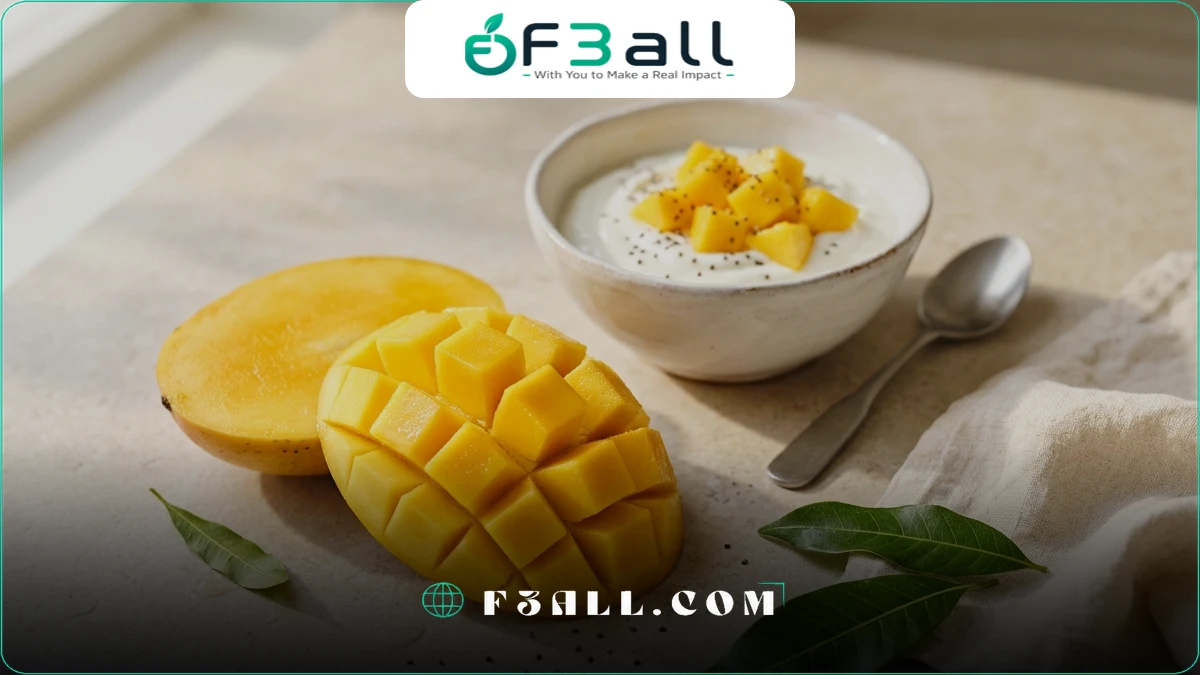
Understanding mango calories for weight loss helps you decide how much fruit can fit into your meals.
Fresh raw mango contains approximately 60 calories per 100 grams. However, the total calorie content depends on the size of the edible portion.
The following values are approximate and based on raw mango flesh.
| Mango Portion | Calories | Carbohydrates | Natural Sugars | Fiber |
| 50 g | 30 kcal | 7.5 g | 6.8 g | 0.8 g |
| 80 g | 48 kcal | 12 g | 10.9 g | 1.3 g |
| 100 g | 60 kcal | 15 g | 13.7 g | 1.6 g |
| 150 g | 90 kcal | 22.5 g | 20.5 g | 2.4 g |
| 200 g | 120 kcal | 30 g | 27.4 g | 3.2 g |
| 250 g | 150 kcal | 37.5 g | 34.3 g | 4 g |
Exact nutritional values vary according to mango variety, ripeness, and growing conditions.
A medium mango may provide considerably more than 100 grams of edible flesh, so eating the entire fruit can result in a larger serving than expected.
For many people, approximately 100 to 150 grams is a practical portion for a snack or part of a meal.
Mango calories for weight loss are manageable when you measure the edible fruit and account for additional ingredients.
Mango Nutrition for Weight Loss

Mango nutrition for weight loss involves more than calories and sugar.
Fresh mango contains water, dietary fiber, carbohydrates, vitamins, minerals, and naturally occurring plant compounds.
Approximately 100 grams of raw mango provides:
| Nutrient | Approximate Amount | Nutritional Role |
| Calories | 60 kcal | Provides energy |
| Carbohydrates | 15 g | Supplies dietary energy |
| Natural Sugars | 13.7 g | Contributes sweetness |
| Fiber | 1.6 g | Supports normal digestion |
| Protein | 0.8 g | Provides a small amount of protein |
| Fat | 0.4 g | Naturally low in fat |
| Vitamin C | 36.4 mg | Supports immune function |
| Potassium | 168 mg | Supports muscle and nerve function |
| Folate | 43 mcg | Supports normal cell function |
| Water | 83.5 g | Contributes to hydration |
Mango also provides carotenoids, including beta-carotene, which the body can convert into vitamin A.
Although mango contains fiber, it is not among the highest-fiber fruits. Its protein content is also relatively low.
For a more satisfying snack, combine mango with a protein source such as plain Greek yogurt.
You can learn more about combining fruit with protein-rich dairy foods in Greek Yogurt for Weight Loss.
Mango provides useful nutrients, but balanced meals and dietary variety remain essential for healthy weight management.
Mango Benefits for Weight Loss
Mango benefits for weight loss mainly come from its ability to replace calorie-dense foods, contribute to dietary variety, and provide natural sweetness.
Can Replace Higher-Calorie Desserts
Fresh mango can be a satisfying alternative to desserts containing large amounts of added sugar or fat.
For example, a measured mango portion may replace:
- Ice cream with sweetened toppings.
- Chocolate desserts.
- Cream-filled pastries.
- Candy.
- Sweetened fruit cups.
- High-calorie puddings.
Replacing these foods with mango may reduce calorie intake when the substitution is made consistently.
However, adding mango after an already substantial dessert does not provide the same calorie-saving benefit.
Provides Dietary Fiber
Approximately 100 grams of mango contains 1.6 grams of fiber.
Fiber supports normal digestive function and can contribute to fullness.
Mango is not exceptionally high in fiber, so it works best alongside other fiber-rich foods such as oats, vegetables, beans, and chia seeds.
Contains Plenty of Water
Fresh mango is approximately 83% water.
Water-rich foods can contribute to meal volume without adding excessive calories.
This makes mango a useful ingredient in fruit bowls, salads, and snacks.
Offers Natural Sweetness
Mango’s natural sweetness can make calorie-controlled meals more enjoyable.
For example, adding mango to plain yogurt may reduce the desire to use honey, syrup, or other sweeteners.
Supports Dietary Variety
Mango provides vitamin C, folate, and carotenoids.
Including it alongside berries, apples, citrus fruits, and vegetables can improve the variety of nutrients in your diet.
The main mango benefits for weight loss are nutritional quality, portion flexibility, and the potential to replace higher-calorie foods.
Read more about: Almonds for Weight Loss | Portions, Calories and Benefits
Mango Serving Size for Weight Loss
Mango serving size for weight loss depends on your daily calorie requirements, activity level, and the other foods you consume.
A serving of approximately 100 to 150 grams of fresh mango is practical for many adults, although individual needs vary.
| Mango Serving | Approximate Calories | Suggested Use |
| 50 g | 30 kcal | Small oatmeal topping |
| 100 g | 60 kcal | Light fruit snack |
| 150 g | 90 kcal | Breakfast or afternoon snack |
| 200 g | 120 kcal | Larger fruit serving |
| 250 g | 150 kcal | Larger snack or divided portion |
Practical portion-control strategies include:
- Cut mango into cubes before serving.
- Measure the edible portion rather than weighing the whole fruit.
- Use a bowl instead of eating directly from a large container.
- Pair mango with protein when possible.
- Include mango calories in your meal planning.
- Adjust other carbohydrate portions when necessary.
For example, 150 grams of mango with Greek yogurt can provide a more balanced snack than mango alone.
The most suitable mango serving size is one that fits your calorie needs while leaving room for a variety of nutritious foods.
Is Mango Fattening
Mango is not inherently fattening.
Weight gain generally occurs when energy intake consistently exceeds energy expenditure.
Although mango contains natural sugars, eating a moderate portion does not automatically increase body fat.
The biggest differences often come from preparation methods.
| Mango Product | Weight-Loss Consideration |
| Fresh mango | Contains water and fiber |
| Frozen unsweetened mango | Convenient alternative to fresh fruit |
| Mango juice | Usually provides less fiber |
| Dried mango | More calorie-dense by weight |
| Sweetened mango smoothie | Calories depend on added ingredients |
| Mango with cream | Added fat increases calories |
| Mango syrup dessert | Added sugar increases energy content |
A serving of fresh mango containing 90 calories is very different from a large mango milkshake made with ice cream, syrup, and sweetened milk.
The milkshake may provide several hundred calories depending on its ingredients.
Mango itself does not automatically cause weight gain; the complete diet and total calorie balance matter more.
Mango Sugar Content and Weight Loss
One common concern about mango for weight loss is its natural sugar content.
Approximately 100 grams of fresh mango contains 13.7 grams of naturally occurring sugars.
However, whole mango also provides water, fiber, vitamins, and minerals.
Natural sugars in whole fruit are consumed within a different nutritional structure from added sugars in soft drinks and candy.
Important differences include:
- Whole mango contains dietary fiber.
- Mango juice generally contains less fiber.
- Sweetened mango drinks may contain added sugar.
- Dried mango concentrates calories into smaller portions.
- Whole mango requires chewing.
- Fresh mango can be combined with protein-rich foods.
For most people, there is no need to eliminate mango simply because it tastes sweet.
People managing diabetes or specific carbohydrate targets may need individualized portion guidance.
The most useful approach is to consider mango’s total calories and serving size rather than judging it only by sugar content.
Mango for Belly Fat
Mango for belly fat is a popular topic because many people want foods that specifically reduce abdominal fat.
However, mango does not selectively burn belly fat.
Abdominal fat reduction generally occurs through overall fat loss, influenced by calorie balance, physical activity, genetics, sleep, and other factors.
Mango may contribute indirectly when it replaces higher-calorie snacks.
For example, choosing 100 grams of fresh mango instead of a large dessert can reduce calorie intake.
A balanced approach to overall fat reduction includes:
- Maintaining an appropriate calorie deficit.
- Eating sufficient protein.
- Including vegetables and whole fruits.
- Performing regular physical activity.
- Incorporating resistance training.
- Getting adequate sleep.
- Maintaining consistent eating habits.
No particular fruit can guarantee fat loss from one body area.
Mango can be included in a weight-management diet, but it should not be treated as a special remedy for belly fat.
Mango Best Time to Eat for Weight Loss
Mango best time to eat depends mainly on your meal schedule, appetite, and calorie needs.
There is no established scientific evidence that eating mango at a particular hour automatically increases fat loss.
Different eating occasions may still offer practical advantages.
| Time | Potential Advantage | Serving Example |
| Breakfast | Adds fruit and natural sweetness | Mango with Greek yogurt |
| Mid-Morning | Convenient snack | 100 g fresh mango |
| Before Exercise | Provides carbohydrates | Mango with yogurt |
| Afternoon | Alternative to sugary snacks | Fresh mango cubes |
| After Exercise | Contributes carbohydrates | Mango with protein |
| Evening | Can replace a heavier dessert | Mango with plain yogurt |
Eating mango at night does not automatically cause weight gain.
Similarly, eating mango on an empty stomach does not guarantee faster fat loss.
If mango fits your daily calorie requirements, the timing is generally less important than the overall diet.
The best time to eat mango is when it helps you maintain balanced meals and consistent eating habits.
Read more about: Is Corn Good for Weight Loss | Nutrition Guide
Mango Recipes for Weight Loss
Mango recipes for weight loss can make healthy eating more enjoyable without relying on restrictive food rules.
The most useful recipes combine moderate mango portions with protein, vegetables, or fiber-rich ingredients.
Mango Greek Yogurt Bowl
| Ingredient | Amount |
| Fresh mango | 100 g |
| Plain nonfat Greek yogurt | 170 g |
| Chia seeds | 10 g |
| Cinnamon | Optional |
Preparation:
- Cut mango into cubes.
- Add Greek yogurt to a bowl.
- Place mango on top.
- Sprinkle with chia seeds.
- Add cinnamon if desired.
Approximate calories: 210 kcal, depending on the ingredients.
This recipe provides protein from yogurt, natural sweetness from mango, and additional fiber from chia seeds.
Mango Chicken Salad
| Ingredient | Amount |
| Fresh mango | 100 g |
| Grilled chicken breast | 120 g |
| Lettuce | 80 g |
| Cucumber | 100 g |
| Tomato | 100 g |
| Olive oil | 5 g |
| Lemon juice | To taste |
Combine the chopped vegetables, mango, and grilled chicken.
Finish with lemon juice, olive oil, and herbs.
Approximate calories: 350–380 kcal.
This meal provides protein, vegetables, and a measured carbohydrate portion from mango.
Mango Protein Smoothie
Ingredients:
- 100 g frozen mango.
- 170 g plain nonfat Greek yogurt.
- 150 ml unsweetened almond milk.
- Ice cubes.
- Optional cinnamon.
Blend until smooth without adding sugar or syrup.
Approximate calories: 175–200 kcal.
Smoothies can fit a calorie-controlled diet, although whole fruit may be more satisfying for some people.
For more preparation ideas, explore Smoothies for Weight Loss Recipes.
Mango Overnight Oats
| Ingredient | Amount |
| Rolled oats | 40 g |
| Fresh mango | 100 g |
| Plain Greek yogurt | 100 g |
| Unsweetened almond milk | 100 ml |
| Chia seeds | 5 g |
Combine the oats, yogurt, milk, and chia seeds.
Refrigerate overnight and add mango before serving.
Approximate calories: 300–330 kcal.
This recipe combines carbohydrates, protein, and fiber in a convenient breakfast.
For additional morning meal ideas, explore Healthy Breakfast Smoothies for Weight Loss.
Healthy mango recipes work best when the complete meal provides balanced nutrition and fits your daily calorie requirements.
Mango Diet Plan
A mango diet plan should not involve eating mango exclusively.
Although mango provides useful nutrients, it does not supply sufficient protein, essential fats, or all the nutrients required for a complete diet.
Instead, mango can be included within a varied eating plan.
Example of a balanced day including mango:
| Meal | Example |
| Breakfast | Greek yogurt, oats, and 100 g mango |
| Morning Snack | Boiled egg and cucumber |
| Lunch | Grilled chicken, brown rice, and vegetables |
| Afternoon Snack | 100 g fresh mango |
| Dinner | Baked fish, potatoes, and roasted vegetables |
| Optional Snack | Plain yogurt or another suitable food |
This is a meal-structure example rather than a personalized calorie prescription.
Actual quantities should depend on individual energy needs.
A balanced mango diet plan should include:
- Protein from eggs, fish, chicken, beans, or tofu.
- Vegetables for fiber and micronutrients.
- Whole grains and other carbohydrate sources.
- Healthy fats in appropriate portions.
- Different fruits rather than mango alone.
- Adequate water intake.
If you are considering a fruit-focused eating pattern, read Fruit Diet for Weight Loss in 7 Days for additional context on fruit-based meal planning.
A varied diet is generally more nutritionally complete than a restrictive fruit-only plan.
The most sustainable mango diet plan is one that includes mango without making it the only source of nutrition.
Mango vs Alternatives for Weight Loss
Mango vs alternatives for weight loss is useful when comparing fruits according to calorie density, fiber, and nutritional value.
Different fruits provide different advantages.
The following values are approximate calories per 100 grams of fresh edible fruit.
| Fruit | Calories | Main Advantage |
| Watermelon | 30 kcal | High water content |
| Strawberries | 32 kcal | Lower calorie density |
| Orange | 47 kcal | Vitamin C |
| Pineapple | 50 kcal | Tropical flavor and vitamin C |
| Apple | 52 kcal | Convenient whole-fruit snack |
| Mango | 60 kcal | Vitamin C and carotenoids |
| Grapes | 69 kcal | Convenient small portions |
| Banana | 89 kcal | More carbohydrates for energy |
Mango contains more calories per 100 grams than strawberries or watermelon but fewer than bananas.
However, calorie content alone does not determine which fruit is most suitable.
Mango vs Apple for Weight Loss
Apples contain slightly fewer calories per 100 grams and generally provide more fiber than mango.
Mango provides a different combination of vitamins and carotenoids.
Both can fit a balanced calorie-controlled diet.
Mango vs Banana for Weight Loss
Bananas provide more calories and carbohydrates per 100 grams than mango.
They may be useful when additional energy is needed, such as before exercise.
Mango can be a lower-calorie alternative by weight.
Mango vs Watermelon for Weight Loss
Watermelon contains substantially fewer calories per 100 grams.
This allows a larger portion by weight for a similar calorie intake.
Mango has a different nutritional profile and a denser texture.
Mango vs Berries for Weight Loss
Many berries contain fewer calories and more fiber per 100 grams than mango.
However, mango can provide variety and may be more appealing in certain recipes.
The best fruit for weight loss is one that fits your calorie requirements, supports dietary variety, and helps you maintain consistent eating habits.
Mango Weight Loss Results
Mango weight loss results depend on overall calorie intake rather than mango consumption alone.
There is no reliable evidence that eating mango produces a specific amount of weight loss within a certain number of days.
However, replacing calorie-dense foods with suitable portions of mango may help reduce total energy intake.
Consider this example.
| Food Choice | Approximate Calories |
| Sweetened dessert | 250 kcal |
| 150 g fresh mango | 90 kcal |
| Calorie difference | 160 kcal |
Replacing the dessert with mango reduces calorie intake by approximately 160 calories for that eating occasion.
If this change contributes to a sustained calorie deficit, it may support gradual weight loss.
However, actual results depend on:
- Daily calorie intake.
- Physical activity.
- Body size and composition.
- Sleep quality.
- Dietary consistency.
- Individual metabolic differences.
- Medical conditions and medications.
- Long-term eating habits.
Short-term weight fluctuations may reflect water balance and digestion rather than changes in body fat.
Mango weight loss results should be evaluated through long-term dietary habits rather than expecting immediate changes from one food.
Fresh Mango vs Dried Mango for Weight Loss
Fresh mango and dried mango differ considerably in calorie density.
Removing water from mango concentrates its calories into a smaller weight.
| Feature | Fresh Mango | Dried Mango |
| Water Content | High | Low |
| Calories per 100 g | Around 60 kcal | Often 300 kcal or more |
| Portion Volume | Larger | Smaller |
| Fiber | Present | Present, varies |
| Added Sugar | No added sugar in plain fruit | Some products contain added sugar |
| Storage | Requires refrigeration after cutting | Convenient for longer storage |
Exact dried mango calories vary depending on moisture content and added ingredients.
For example, 30 grams of dried mango may contain approximately 90 to 110 calories.
A similar calorie amount could come from around 150 grams of fresh mango.
Dried mango is not automatically unhealthy, but its concentrated calories make portion awareness important.
Fresh mango may be easier to include in larger, water-rich portions, while dried mango is best consumed in measured servings.
Read more about: Is Cheese Good for Weight Loss | Best Choices
Mango Juice vs Whole Mango
Whole mango and mango juice are not nutritionally identical.
Whole mango contains fiber and requires chewing, while juice generally provides less fiber and can be consumed quickly.
A large glass of mango juice may contain the equivalent of several fruit portions.
Commercial mango drinks may also contain added sugar.
When choosing mango beverages, check:
- Serving size.
- Total calories.
- Added sugar.
- Fiber content.
- Additional ingredients.
- Whether the product is juice, nectar, or a sweetened drink.
Homemade smoothies made with whole mango may retain more fiber than strained juice.
However, ingredients such as honey, ice cream, sweetened milk, and syrups can significantly increase calories.
For structured smoothie ideas, explore 7 Day Smoothie Weight Loss Diet Plan while keeping in mind that smoothies should complement balanced meals rather than replace all food groups.
Whole mango is often the more practical choice when fullness and portion control are priorities.
Can You Eat Mango Every Day While Losing Weight
Yes, mango can be eaten daily as part of a varied diet.
There is no general requirement to eliminate mango during weight loss.
However, eating different fruits provides a wider range of nutrients.
Consider alternating mango with:
- Apples.
- Oranges.
- Strawberries.
- Blueberries.
- Kiwi.
- Pineapple.
- Watermelon.
- Pears.
If mango is your preferred fruit, a moderate daily portion can still fit your eating plan.
The important factors are total calorie intake, portion size, and overall nutritional balance.
Daily mango consumption is compatible with weight management when it fits your dietary needs and does not replace essential food groups.
Common Mango Weight Loss Mistakes
Several misconceptions can make mango seem unsuitable for weight loss.
| Common Mistake | Better Approach |
| Eating large quantities without measuring | Choose a practical portion |
| Assuming natural sugar automatically causes fat gain | Focus on total calorie balance |
| Drinking sweetened mango juice frequently | Choose whole mango more often |
| Adding syrup or cream to every serving | Use plain yogurt or fresh fruit |
| Expecting mango to burn belly fat | Focus on overall fat reduction |
| Following a mango-only diet | Include balanced meals |
| Ignoring smoothie calories | Count all ingredients |
| Avoiding mango after sunset | Consider total daily intake |
| Comparing fruits only by sugar content | Consider calories, fiber, and nutrients |
| Expecting immediate weight-loss results | Follow long-term progress |
Avoiding these mistakes makes it easier to enjoy mango without unnecessary restrictions.
Is Mango Good for Weight Loss becomes easier to answer when mango is viewed as one nutritious part of a complete eating pattern.
Why F3all Is Your Best Choice

At F3all, Is Mango Good for Weight Loss is explained through practical nutrition information, realistic serving sizes, and balanced meal examples. Instead of treating naturally sweet fruits as automatically good or bad, F3all focuses on how everyday foods fit into sustainable weight-management habits.
- Clear Mango Calorie Information: Understand how different mango portions contribute to daily energy intake.
- Practical Nutrition Guidance: Learn about mango carbohydrates, fiber, vitamins, and water content.
- Realistic Serving Recommendations: Explore practical portions without unnecessary dietary restrictions.
- Healthy Mango Recipe Ideas: Discover ways to combine mango with yogurt, oats, vegetables, and protein-rich foods.
- Useful Fruit Comparisons: Compare mango with apples, bananas, berries, and other fruits based on nutrition and calories.
- Balanced Weight-Loss Information: Understand why overall calorie intake matters more than avoiding individual foods.
- Additional Everyday Resources: Explore Weight Loss, Weight Loss Diet Plans, and Delicious Diet Recipes for more practical guidance.
F3all makes mango for weight loss easier to understand by focusing on realistic portions, balanced nutrition, and sustainable eating habits.
Frequently Asked Questions
Is Mango Good for Weight Loss?
Yes, mango can fit into a weight-loss diet when eaten in suitable portions. It provides vitamins, water, fiber, and carbohydrates, while overall calorie intake remains the main factor influencing weight loss.
How many calories are in mango?
Approximately 100 grams of fresh mango contains 60 calories. A 150-gram serving provides around 90 calories, although exact values vary by variety and ripeness.
How much mango should I eat for weight loss?
Around 100 to 150 grams of fresh mango is a practical serving for many adults. Individual portions should depend on calorie requirements and the rest of the diet.
Does mango help burn belly fat?
No, mango does not specifically burn belly fat. Abdominal fat reduction generally requires overall fat loss through appropriate calorie balance and lifestyle habits.
Is mango high in sugar?
Mango contains approximately 13.7 grams of naturally occurring sugars per 100 grams. Whole mango also provides fiber, water, and nutrients, making it different from foods containing substantial added sugar.
What is the best time to eat mango for weight loss?
There is no scientifically established best time. Mango can be eaten at breakfast, between meals, before exercise, or in the evening when it fits your daily calorie needs.
Can I eat mango every day while losing weight?
Yes, mango can be included daily when portions are appropriate. Eating other fruits and vegetables is also important for nutritional variety.
Is mango better than banana for weight loss?
Mango contains fewer calories per 100 grams than banana, but neither fruit is automatically better. Portion size, nutritional needs, and overall dietary balance determine the more suitable choice.
Is mango juice good for weight loss?
Mango juice can fit within calorie requirements, but whole mango generally provides more fiber and may be more satisfying. Sweetened mango drinks can contain substantial added sugar.
How long does mango take to show weight loss results?
Mango does not produce weight-loss results within a specific timeframe. Changes in body weight depend on overall calorie intake, activity level, consistency, and individual factors.
In the End
Is Mango Good for Weight Loss has a straightforward answer: fresh mango can fit comfortably into a calorie-controlled diet when portions are appropriate. It provides approximately 60 calories per 100 grams, along with vitamin C, water, dietary fiber, and other useful nutrients.
Mango benefits for weight loss are mainly related to replacing higher-calorie foods, adding variety to meals, and providing natural sweetness without requiring added sugar. Mango does not directly burn fat, target belly fat, or guarantee faster weight-loss results.
Choose sensible portions, enjoy whole mango more often than sweetened mango drinks, and combine it with protein-rich foods for more satisfying meals.
You do not need to eliminate mango to lose weight. Focus on your complete diet, maintain consistent eating habits, and enjoy mango as part of a balanced approach to long-term weight management.
References